 Save
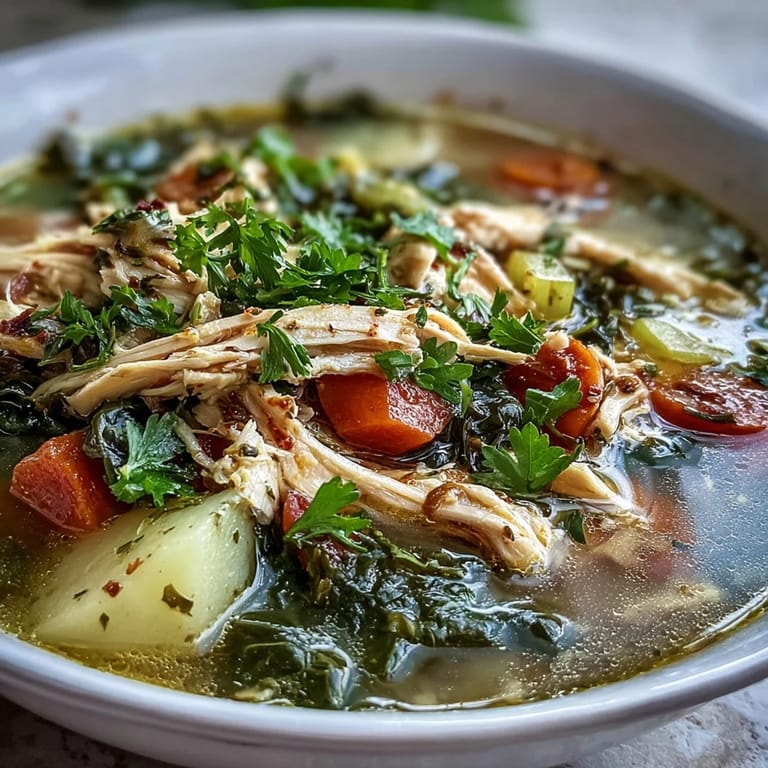
Save There's something about a pot of collard greens and chicken soup that stops you mid-afternoon, makes you pause whatever you were doing, and just breathe. My neighbor dropped off a bag of collard greens from her garden one October, and I stood there holding them like I'd been handed something precious. That evening, I threw together whatever was in my pantry—chicken, potatoes, carrots—and something just clicked. The greens turned a deeper emerald as they softened into the broth, and suddenly this humble soup felt like the answer to a question I didn't know I was asking.
I made this soup for my sister after she'd had a rough week, and watching her spoon through the steaming bowl, catching the soft chicken and creamy potatoes, felt like the most honest conversation we could have. She asked for the recipe right there, and that's when I realized this wasn't just lunch—it was comfort in edible form.
Ingredients
- 2 boneless, skinless chicken breasts (about 400 g): Poaching them whole in the broth keeps them incredibly tender and flavors the stock from the inside out.
- 1 large bunch collard greens (about 300 g), stems removed and leaves chopped: The stems are tough, so don't skip removing them; the leaves are where the magic happens.
- 2 medium Yukon Gold potatoes, peeled and diced: These hold their shape and become creamy without falling apart, which is exactly what you want here.
- 2 carrots, peeled and sliced: Slice them on a slight diagonal so they cook evenly and look a little prettier in the bowl.
- 2 celery stalks, diced: This is your aromatic foundation—don't skip it, even if you think celery is boring.
- 1 medium onion, diced: It will dissolve into the broth and become the backbone of your flavor.
- 3 garlic cloves, minced: Three is the minimum; go to four if your kitchen needs the confidence boost.
- 1.5 liters (6 cups) low-sodium chicken broth: Low-sodium lets you control the salt and taste the actual vegetables—use the good stuff.
- 1 bay leaf: It sits there quietly doing its job; remember to fish it out before serving.
- 1 teaspoon dried thyme: Fresh is better if you have it, but dried works beautifully here.
- 1 teaspoon smoked paprika: This is what gives the broth warmth and a subtle smokiness that makes people ask what that flavor is.
- 1/2 teaspoon black pepper: Freshly ground if you can manage it.
- 1 teaspoon salt (or to taste): Taste as you go because it all depends on your broth.
- 2 tablespoons olive oil: Good enough to pour, not fancy enough to waste on high heat.
- Juice of 1/2 lemon: This brightens everything at the end and makes the greens taste more like themselves.
- Fresh parsley, chopped, for garnish (optional): If you have it, sprinkle it on like you're finishing something intentional.
Tired of Takeout? 🥡
Get 10 meals you can make faster than delivery arrives. Seriously.
One email. No spam. Unsubscribe anytime.
Instructions
- Sauté your aromatics:
- Heat the olive oil in your largest pot over medium heat and add the onion, carrots, and celery. Let them soften for 5 to 6 minutes, stirring occasionally—you're building the base, so listen for the gentle sizzle and trust your timing.
- Bloom the garlic:
- Add the minced garlic and cook for just 1 minute, stirring constantly so it doesn't brown; you want it fragrant, not bitter.
- Build the broth:
- Add the chicken breasts, diced potatoes, bay leaf, thyme, smoked paprika, salt, and pepper, then pour in all the chicken broth. Stir once to make sure nothing is sticking to the bottom.
- Simmer the chicken and potatoes:
- Bring everything to a gentle boil, then lower the heat and cover. Let it simmer for 20 minutes until the chicken is cooked through (it should shred easily) and the potatoes are tender but not falling apart.
- Shred the chicken:
- Remove the chicken breasts from the pot and place them on a cutting board. Using two forks, one in each hand, pull the meat apart in a crisscross motion until it's in tender, bite-sized shreds. Return it to the pot immediately.
- Add the greens:
- Stir in the chopped collard greens and let them simmer uncovered for 10 to 12 minutes. Watch as they transform from bright green to a deeper, more tender version of themselves.
- Finish with brightness:
- Squeeze in the lemon juice and taste the broth. Add more salt, pepper, or lemon as needed—this is where your instincts matter.
- Serve and enjoy:
- Ladle the soup into bowls, add a small handful of fresh parsley if you like, and serve while it's still steaming. The aroma alone is worth the effort.
 Save
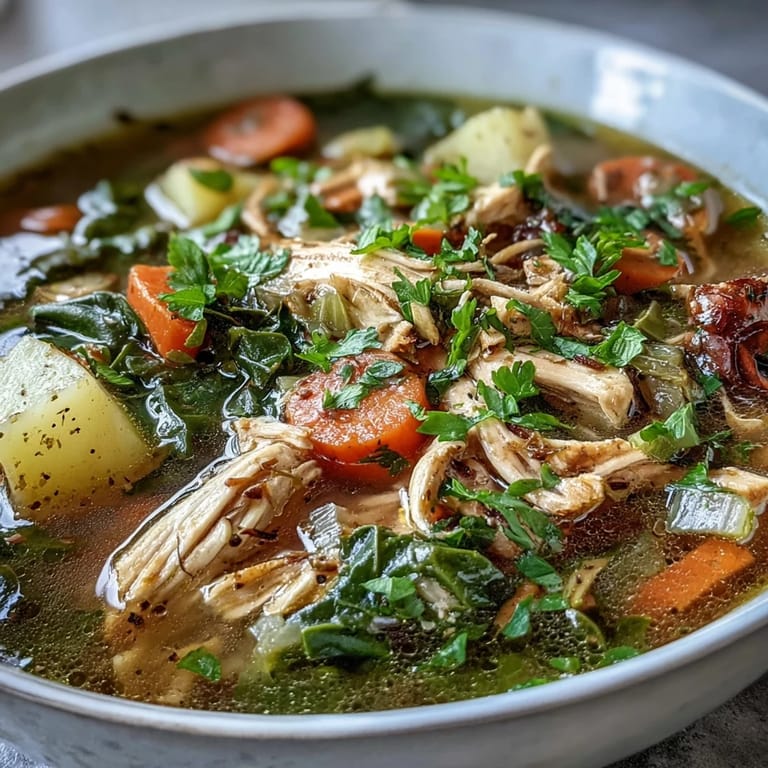
Save Years later, someone will text you asking for this recipe at 5 p.m. because they need dinner and comfort in the same bowl. That's when you'll know this soup has done its job.
The Secret of Collard Greens
Collard greens have a reputation for being bitter, but that's usually because they've been overcooked or handled roughly. In this soup, they only spend those final 10 to 12 minutes in the broth, which is just enough time for them to soften while holding onto their character. The smoked paprika in the broth complements their earthiness perfectly, and by the time you add the lemon juice, any slight bitterness transforms into something almost sweet. I've learned that vegetables want respect, and greens especially want to know they haven't been forgotten or punished on the stovetop.
Why Potatoes Matter Here
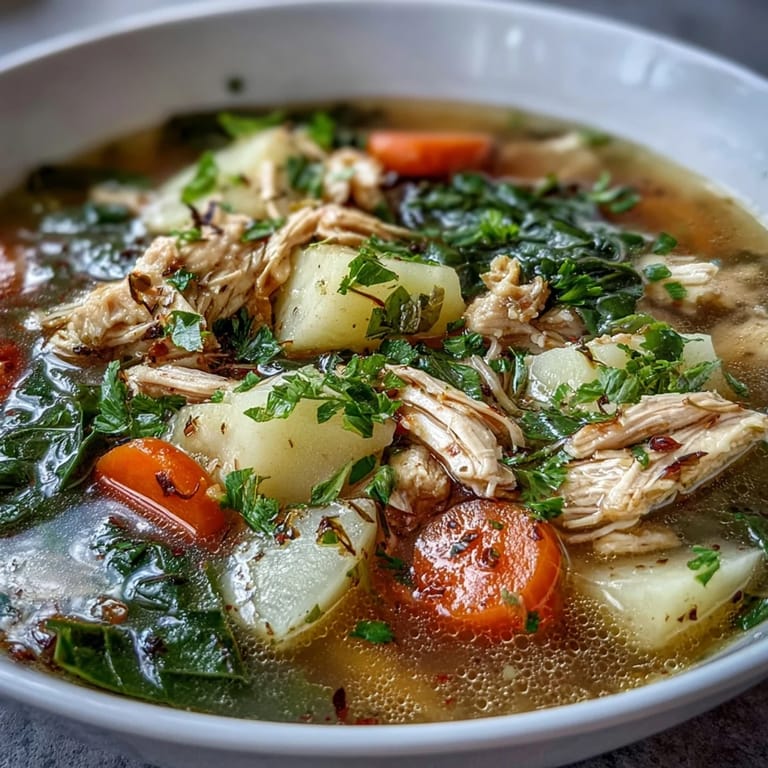
The Yukon Golds are non-negotiable in this soup because they have a natural creaminess that waxy potatoes provide. When they cook in the broth, they release a subtle starch that thickens the liquid just enough without needing cream or flour. I once made this with russets out of convenience, and the soup turned cloudy and grainy—it taught me that the potato you choose matters as much as any technique. Dice them all roughly the same size so they cook evenly, and you'll have pockets of tender potato in every spoonful.
Making It Your Own
This recipe is a foundation, not a rulebook, and the best soups are the ones you make yours. Some days you might add a Parmesan rind during simmering (remove it before serving) for deeper umami, or swap kale or Swiss chard for the collard greens. If you're cooking vegetarian, leave out the chicken, use vegetable broth instead, and stir in a can of drained white beans for protein—it's just as nourishing and different in a good way. The point is to listen to what your kitchen has and what your body needs.
- Add a Parmesan rind while simmering for an extra layer of richness.
- Serve alongside crusty bread or over brown rice if you want something more substantial.
- This soup freezes beautifully for up to three months, so make a double batch on a Sunday afternoon.
 Save
Save This soup tastes even better the next day when the flavors have settled and married into something more complex. Keep a pot of it in your refrigerator, and you'll have comfort ready whenever you need it.
Recipe FAQ
- → Can I use kale instead of collard greens?
Yes, kale or Swiss chard make excellent substitutes for collard greens. Adjust cooking time slightly as kale may cook faster than collard greens.
- → How do I store leftovers?
Store cooled soup in an airtight container in the refrigerator for up to 4 days. Reheat gently on the stove, adding a splash of broth if needed.
- → Can I make this vegetarian?
Absolutely. Omit the chicken and use vegetable broth instead. Add a can of drained white beans or chickpeas for protein to maintain the hearty texture.
- → What can I serve with this soup?
Crusty bread, cornbread, or a side salad pair wonderfully. For a more filling meal, serve over brown rice or with grilled cheese sandwiches.
- → Can I freeze this soup?
Yes, freeze in portion-sized containers for up to 3 months. The potatoes may soften slightly upon reheating, but the flavor remains delicious.
- → How do I prevent the collard greens from becoming bitter?
Add the chopped greens during the last 10-12 minutes of simmering. This keeps them vibrant and tender while maintaining their sweet, earthy flavor.