 Save
Save My nonna used to make this pie every Easter, and I'd watch her fold the pastry with such care, her flour-dusted hands moving with a certainty I could never quite replicate. Years later, standing in my own kitchen on a spring morning, I realized the magic wasn't in perfection but in the ritual itself, in how the smell of baking pastry and creamy ricotta fills a house with celebration. This Italian Easter Pie became my way of honoring that tradition while making it unmistakably mine, studded with salami and cheese in a way that felt both familiar and fresh.
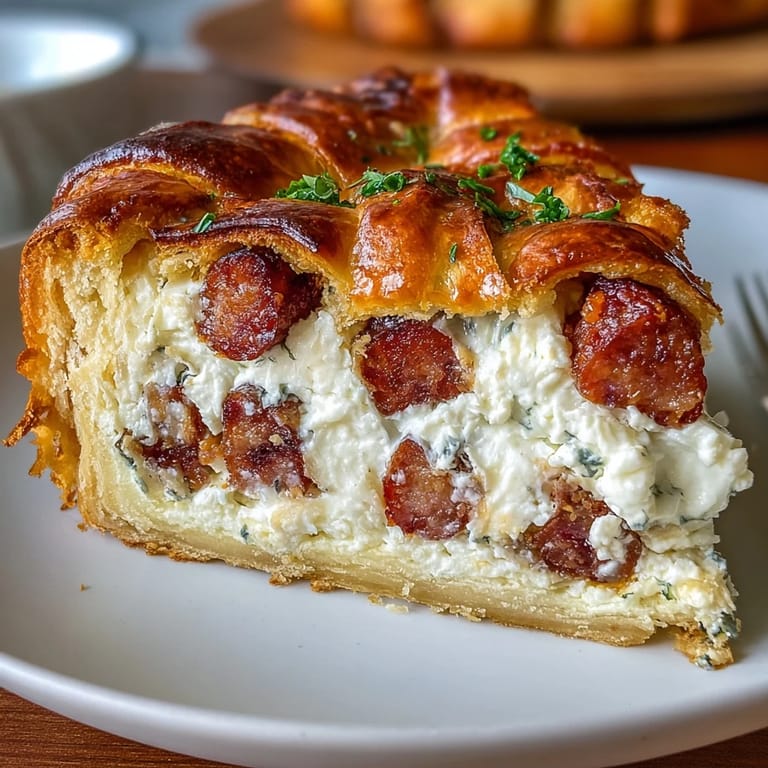
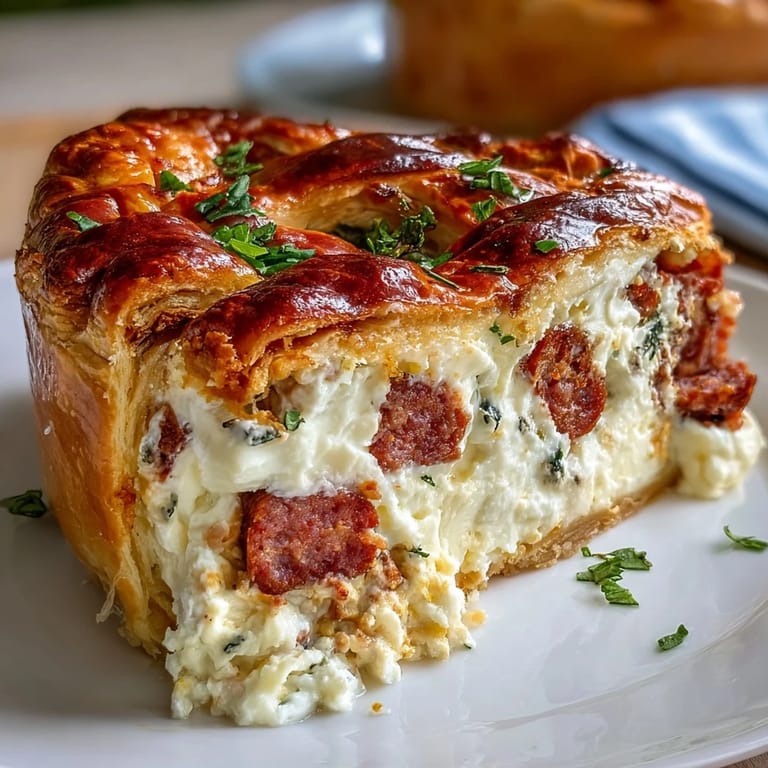
I made this for the first time when my partner's family invited us for Easter brunch, and I was honestly nervous about bringing a homemade pie to a gathering where everyone was already bringing something impressive. But the moment I pulled it from the oven and saw that golden lattice crust, something shifted, and I knew it would be okay. When we cut into it at the table and the creamy filling spilled onto the plate with those little nuggets of salami scattered throughout, people actually stopped talking, which in an Italian family is no small feat.
Ingredients
- All-purpose flour: You need enough to create a sturdy pastry that won't tear when you stretch it, but not so much that it becomes tough and unyielding.
- Unsalted butter, cold and cubed: This is non-negotiable, the difference between a flaky crust and one that feels dense and heavy; keep it cold right up until you work it in.
- Salt: A little in the pastry, more in the filling, balancing everything without overpowering the delicate cheeses.
- Eggs: Two go into the pastry for richness, four into the filling to bind everything together and create that custardy texture.
- Cold water: Just enough to bring the dough together, added tablespoon by tablespoon so you don't accidentally create a sticky mess.
- Whole-milk ricotta cheese, well drained: The soul of the filling, creamy and mild; drain it thoroughly or your pie will be watery and sad.
- Heavy cream: This luxurious addition makes the filling silky and prevents it from becoming grainy as it bakes.
- Parmigiano-Reggiano cheese, grated: The sharpness cuts through the richness and adds a salty depth that tastes deeply Italian.
- Diced Italian salami: Choose a good quality salami with personality; cheap versions disappear into the background.
- Shredded mozzarella cheese: A gentler cheese that melts smoothly and adds stretch and moisture to every bite.
- Fresh parsley, chopped: A whisper of color and freshness that reminds your palate this is springtime.
- Ground black pepper and nutmeg: These warm spices make people wonder what the secret ingredient is, and you'll smile knowing it's just a pinch of each.
Tired of Takeout? 🥡
Get 10 meals you can make faster than delivery arrives. Seriously.
One email. No spam. Unsubscribe anytime.
Instructions
- Prepare your workspace and preheat:
- Set your oven to 375°F and grease your pan while you work; this gives the oven time to reach the right temperature and keeps you from scrambling later.
- Make the pastry dough:
- Combine flour and salt, then cut in the cold butter until it looks like coarse breadcrumbs, which means you've got little pockets of butter that will steam and create flakiness as the pie bakes. Add eggs and just enough water so the dough comes together without being wet, then chill it wrapped in plastic for 20 minutes while you focus on the filling.
- Line the pan:
- Roll out two-thirds of your chilled dough and fit it into the pan, letting the edges hang over; this overhang is your insurance policy for crispy, flaky edges.
- Build the filling:
- In a large bowl, combine drained ricotta, eggs, cream, and cheeses, stirring until smooth, then fold in the salami, parsley, and seasonings; the filling should look creamy with flecks of color throughout.
- Fill and lattice:
- Pour the filling into the pastry-lined pan and smooth the top gently, then roll out your remaining dough and cut it into strips about half an inch wide. Arrange them in a diagonal lattice pattern, weaving each strip over and under, which isn't just beautiful but also helps the heat circulate and cook everything evenly.
- Finish and bake:
- Brush the lattice and edges with beaten egg until glossy, then bake for 55 to 60 minutes until the crust is deep golden and the filling is just set but still slightly jiggly in the very center. If the edges brown too quickly, loosely tent them with foil and keep going.
- Cool before serving:
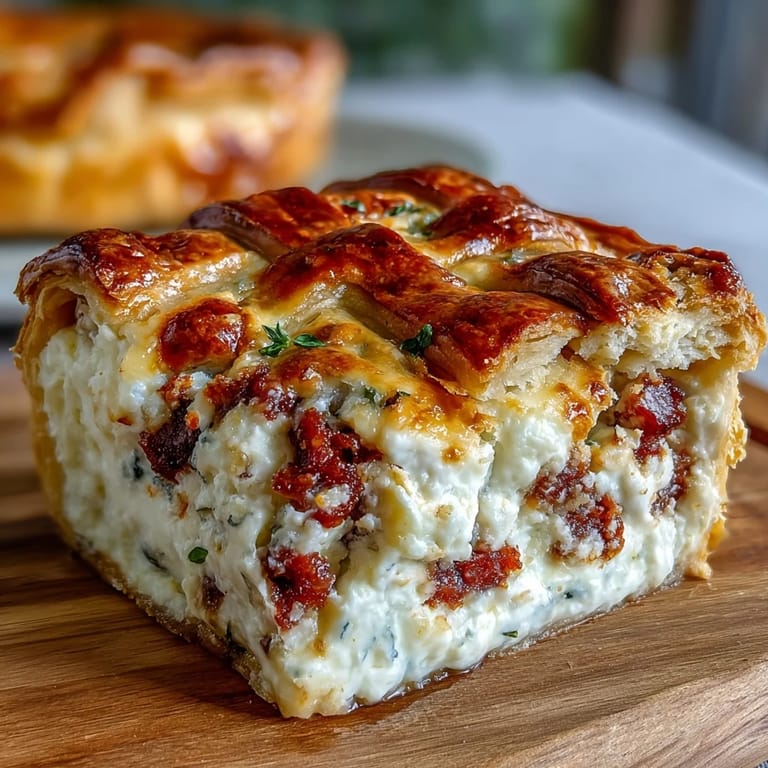
- Let the pie rest for at least 30 minutes before cutting; this gives the filling time to set properly and makes for clean slices instead of a creamy mess.
 Save
Save There's something about watching someone you love take that first bite of something you've made, seeing their eyes light up as the flavors hit them all at once, that makes every minute of work feel worthwhile. This pie stopped being just food the moment it became a memory we'd share, something my family now asks me to make every spring without fail.
The Art of a Good Pastry
I used to think pastry was all about technique and precision, but what I've learned is that it's really about respecting the ingredients and understanding what they're trying to do. The butter wants to stay cold so it can create steam; the flour wants to be handled gently so the gluten doesn't make everything tough; the eggs want just enough water to bind everything into cooperation. Once you understand those relationships, the pastry becomes less intimidating and more like a conversation where everyone gets a say.
Salami Selection Matters More Than You'd Think
I learned this the hard way by using a generic packaged salami from the supermarket, and while the pie was still delicious, it felt somehow one-dimensional, like a musician playing only the high notes. When I switched to a quality Italian salami from a proper butcher counter, something shifted; the flavor became more nuanced, with hints of garlic and spice that lingered on your palate. The salami is roughly a quarter of the filling, so choosing one you'd actually want to eat on a board with cheese suddenly makes all the difference in how the entire pie tastes.
Why Temperature Matters for Serving
This pie is genuinely versatile about temperature in a way that feels like a gift, because it means you can bake it hours in advance and still serve it confidently without reheating. Warm, it's creamy and custard-like; at room temperature, it slices cleanly and the flavors become even more pronounced; cold from the refrigerator, it's almost like a savory cheesecake. I've served it three different ways at three different gatherings, and every version was beloved for its own reasons.
- If you're serving it warm, let it rest for 30 minutes after baking but before slicing so the filling sets enough to hold together.
- Make it the day before if you want to serve it at room temperature, as this gives all the flavors time to meld and mellow together.
- Leftovers stay fresh refrigerated for up to three days and actually taste better as the flavors continue to develop and deepen.
 Save
Save This pie is an invitation to slow down and cook with intention, to taste the history in every bite and make it your own. Once you've made it once, you'll understand why my nonna guarded her recipe so carefully, and why I'm so happy to share mine with you.
Recipe FAQ
- → What type of cheese is used in this pie?
The filling includes whole-milk ricotta, grated Parmigiano-Reggiano, and shredded mozzarella cheese, creating a rich and creamy texture.
- → Can the salami be substituted?
Yes, prosciutto or cooked ham can replace salami for variation, or omit completely for a vegetarian option with added vegetables like spinach.
- → How do you achieve a flaky pastry crust?
Use cold, cubed unsalted butter cut into flour until coarse crumbs form, then quickly add eggs and cold water. Chill the dough before rolling out to maintain flakiness.
- → What’s the best way to bake the pie without overbrowning edges?
If the crust edges brown too fast, loosely cover them with foil halfway through baking to prevent burning while allowing the center to cook fully.
- → How should this savory pie be served?
It’s best enjoyed slightly warm or at room temperature, making it a versatile choice for brunch or festive gatherings.
- → Can this pie be made ahead?
Yes, it can be prepared in advance and refrigerated. Reheat gently before serving to retain flaky crust and warm filling texture.