 Save
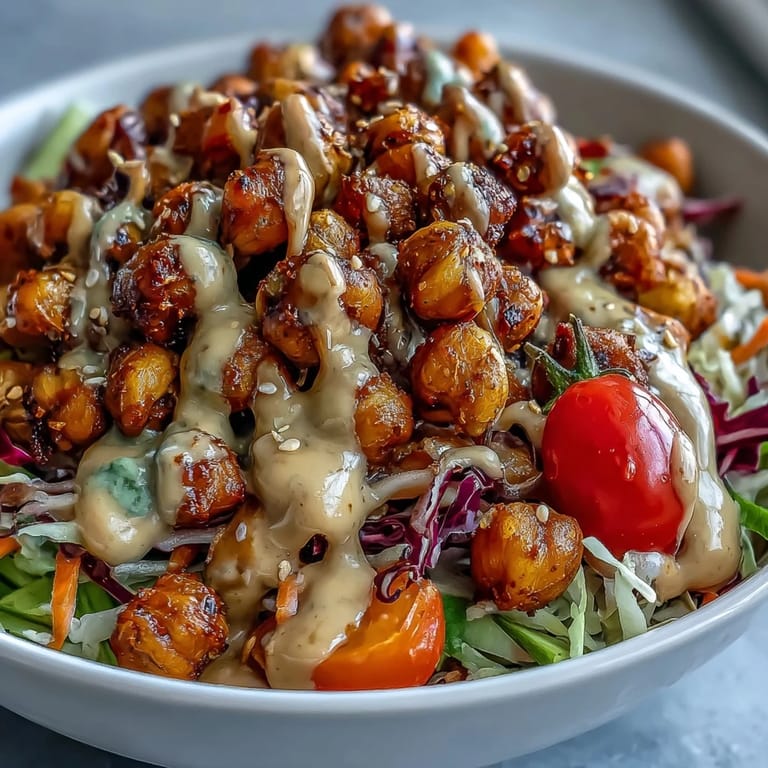
Save My roommate came home one afternoon with a bag of roasted chickpeas from the farmers market, and instead of eating them as a snack, I tossed them into a bowl with whatever vegetables were in the fridge and drizzled them with peanut sauce I'd whipped up on impulse. That single bowl became something I craved constantly, so I started making it intentionally, tweaking the spices and sauce until it felt like its own complete meal. This peanut chickpea bowl has since become my go-to when I need something that feels both indulgent and genuinely good for my body.
I made this for a potluck once and watched people go back for seconds, which never happens at office parties. What struck me was that the vegetarians weren't the only ones loading up their plates—the peanut sauce somehow made everyone feel like they were eating something luxurious rather than virtuous, and that's the sweet spot I always aim for in cooking.
Ingredients
- Chickpeas (2 cans, drained and rinsed): The protein backbone of this bowl, and draining them thoroughly prevents a watery, mushy result that I learned the hard way my first attempt.
- Olive oil (1 tbsp): Just enough to coat the chickpeas for even roasting and browning without making them greasy.
- Smoked paprika (1 tsp): This spice is what makes roasted chickpeas taste like they're meant to be there, not like an afterthought.
- Ground cumin (1/2 tsp): Adds warmth and earthiness that ties the whole bowl together beautifully.
- Garlic powder (1/2 tsp), salt, and black pepper: The holy trinity of seasoning—simple but essential for making every bite taste intentional.
- Cooked brown rice or quinoa (2 cups): Your base; quinoa adds extra protein if you want to boost it further.
- Raw vegetables (red cabbage, carrots, cucumber, cherry tomatoes, edamame): The crunch and color are non-negotiable; they make each spoonful feel fresh and alive.
- Fresh cilantro (1/4 cup): Brightens everything up at the last moment—don't skip it or use dried here.
- Creamy peanut butter (1/3 cup): Use natural peanut butter if you prefer, though it may need more stirring before thinning with water.
- Soy sauce (2 tbsp) or tamari for gluten-free: Provides the savory depth that balances the peanut butter's richness.
- Maple syrup (1 tbsp): Sweetness that rounds out the sauce without making it cloying.
- Rice vinegar (1 tbsp): The acid that brightens everything and keeps the sauce from tasting one-dimensional.
- Sriracha or chili sauce (1 tsp, optional): Add this if you want a gentle kick, or skip it if you're cooking for people who prefer mild flavors.
- Garlic (1 clove, minced): Fresh garlic makes a noticeable difference in the sauce's complexity compared to powder.
- Warm water (2-4 tbsp): The secret to a pourable sauce; add gradually until you reach the consistency you want.
- Roasted peanuts and sesame seeds: The final flourish that adds texture and makes everything feel a little more special.
Tired of Takeout? 🥡
Get 10 meals you can make faster than delivery arrives. Seriously.
One email. No spam. Unsubscribe anytime.
Instructions
- Get your oven ready and prep your workspace:
- Preheat the oven to 425°F and line a baking sheet with parchment paper so cleanup feels like less of a burden later. This small step prevents sticking and means you can focus on the fun parts of cooking.
- Season and roast your chickpeas until they're golden:
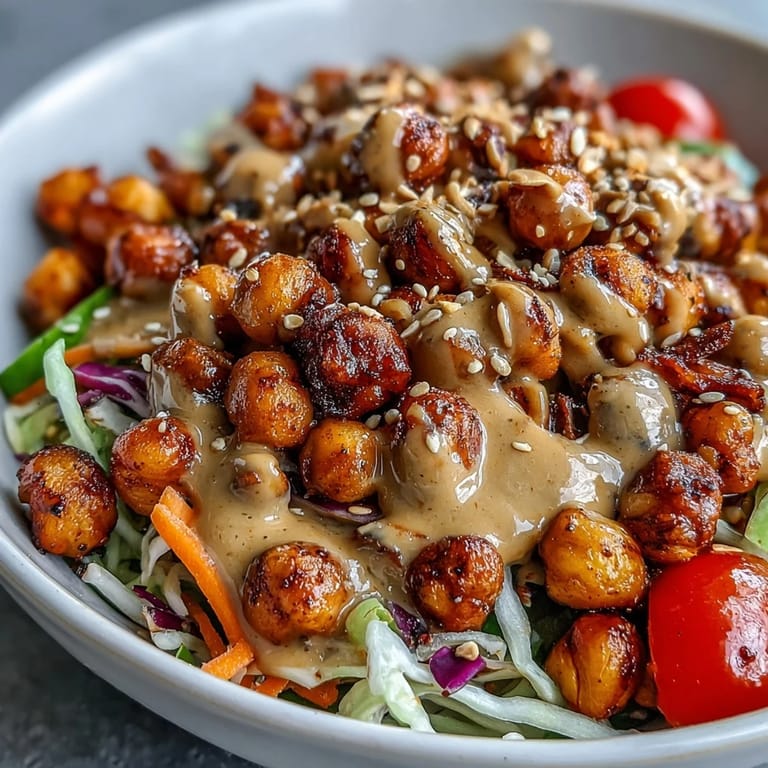
- Toss the drained chickpeas with olive oil and all your spices in a bowl, making sure every single bean gets coated evenly. Spread them on the baking sheet and roast for 20 to 25 minutes, shaking the pan halfway through; you'll know they're ready when they smell nutty and look slightly wrinkled and deeply golden.
- Make your peanut sauce while chickpeas roast:
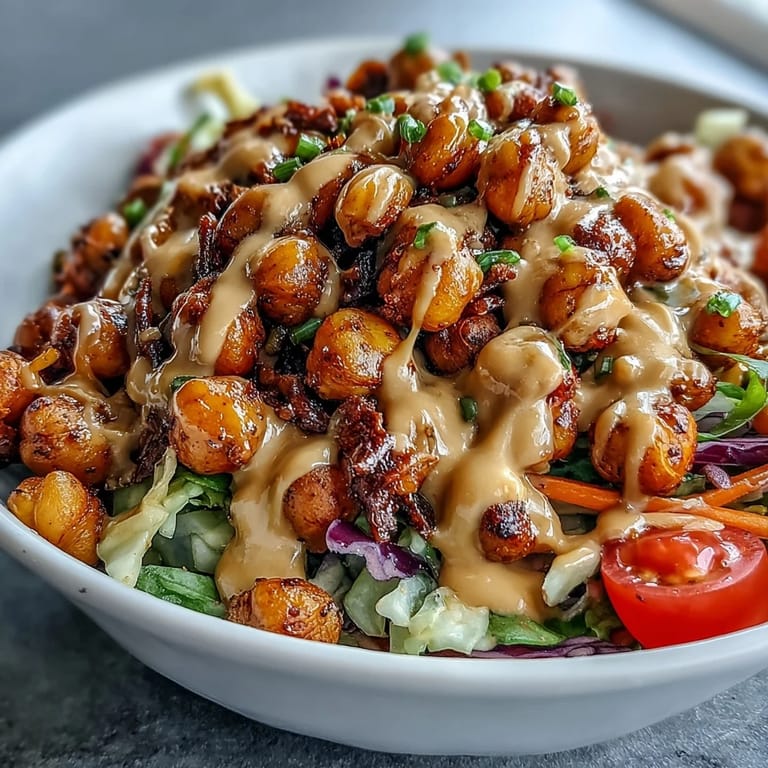
- Whisk together the peanut butter, soy sauce, maple syrup, rice vinegar, sriracha if you're using it, and minced garlic in a bowl. Start with 2 tablespoons of warm water and whisk until smooth, then keep adding water a tablespoon at a time until you reach a sauce that drizzles easily but still coats a spoon.
- Prep your vegetables and grains:
- If your rice or quinoa isn't cooked yet, get that going according to package directions. While it cooks, slice your carrots into matchsticks, halve your cherry tomatoes, and cut your cucumber into half-moons; the uniformity makes the bowl feel intentional and makes each bite balanced.
- Build your bowls with care and intention:
- Divide the cooked grain among four bowls, then arrange your vegetables in sections around it—this isn't just prettier, it also means people can eat whatever they're craving first. Top each bowl with a generous handful of roasted chickpeas, then scatter on some edamame and fresh cilantro.
- Add the sauce and final touches:
- Drizzle the peanut sauce generously over each bowl until it pools slightly at the bottom, then sprinkle with chopped roasted peanuts and sesame seeds if you're using them. Serve with lime wedges on the side so people can squeeze a little brightness into each bite.
 Save
Save There's something deeply satisfying about eating a bowl of food where nothing is cooked to death, where everything still tastes like itself, and where the only thing holding it together is a sauce you made with your own hands. That's what this bowl represents to me now—proof that vegetarian food doesn't need to be complicated or apologetic.
How to Make This Bowl Your Own
The beauty of this recipe is that it's a foundation rather than a rulebook, so you can rearrange everything based on what's in your fridge or what you're craving that day. I've made it with roasted broccoli instead of raw vegetables, with leftover roasted sweet potato, with a handful of baby spinach, and it's been delicious every single time because the roasted chickpeas and peanut sauce are doing the heavy lifting.
Storing and Reheating
I usually assemble the bowls fresh, but if you're meal prepping, keep the components separate in containers and combine them when you're ready to eat. The grain and chickpeas will keep in the fridge for four days, the raw vegetables for about three days, and the peanut sauce for up to a week—just stir it back to smooth when you pull it out and it'll taste like you made it fresh.
Ways to Build on This Foundation
Once you've made this bowl a few times and it feels familiar, you'll start seeing all the possibilities hiding in your pantry and refrigerator. Swap in different grains, add roasted vegetables, use different vegetables entirely—the structure is flexible enough to grow with your mood and what you have on hand.
- Add a soft-boiled egg or crumbled tofu for extra protein and richness.
- Toss in roasted broccoli, cauliflower, or Brussels sprouts for deeper, charred flavors.
- Use cauliflower rice or lettuce as your base instead of grains for a lighter, lower-carb version.
 Save
Save This bowl has become the recipe I reach for when I want to feel like I'm taking care of myself without it feeling like a sacrifice, and I think that's the kind of food everyone deserves. Make it, adjust it, share it with someone, and watch how a simple bowl of vegetables and legumes can become the thing they ask you to bring to every gathering.
Recipe FAQ
- → Can I make this bowl gluten-free?
Yes, simply use tamari instead of soy sauce in the peanut sauce and ensure your grains are certified gluten-free. The rest of the ingredients are naturally gluten-free.
- → How long do roasted chickpeas stay crispy?
Roasted chickpeas are best enjoyed immediately for maximum crispiness. If storing, keep them separate from the vegetables and sauce. They can be refreshed in the oven for a few minutes before serving.
- → Can I use different nut butters?
Almond butter or cashew butter work well as substitutes. The flavor profile will shift slightly but still provide that creamy, nutty element that ties the bowl together.
- → Is this bowl meal prep friendly?
Absolutely. Store components separately in airtight containers—grains, roasted chickpeas, chopped vegetables, and sauce in its own jar. Assemble when ready to eat for the best texture and freshness.
- → What other grains work well?
Brown rice and quinoa are excellent choices. For a lighter option, try cauliflower rice. Farro, bulgur, or even noodles would also complement the peanut sauce beautifully.