 Save
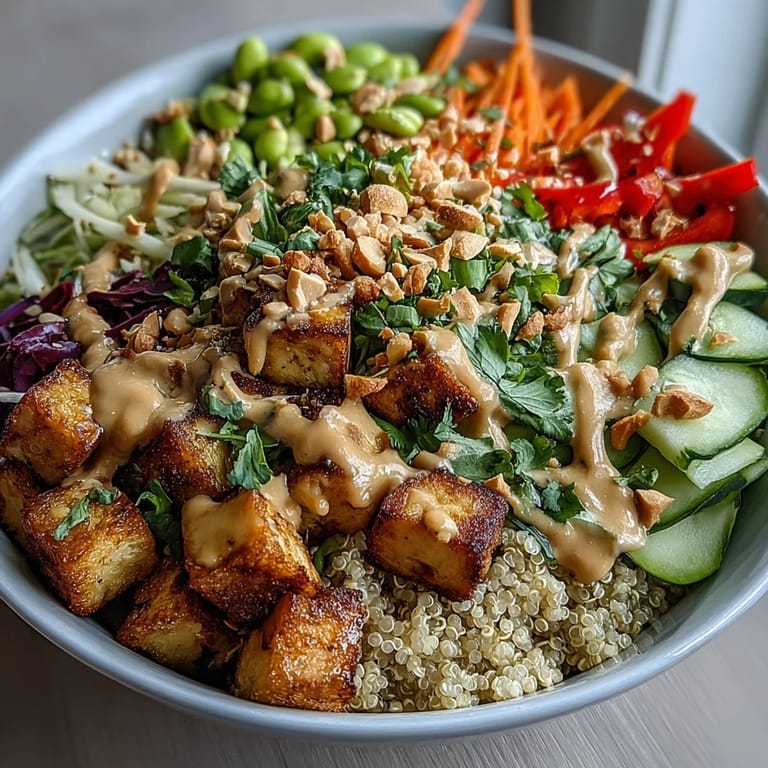
Save My friend Maya showed up one Tuesday with this bowl after her yoga class, and I watched her eat it with such quiet satisfaction that I had to ask for the recipe. She'd been meal-prepping these for weeks, and one bite explained why—the crispy tofu squeaks between your teeth, the vegetables stay bright and crunchy, and that peanut sauce wraps everything together like a warm hug. I've made it probably thirty times now, and it never gets boring because you can swap vegetables with whatever's in season or your mood demands.
I packed this in containers for a camping trip last summer, and something magical happened—eating it cold from a cooler, sitting by the water, made it taste even better than at home. The flavors had melded overnight, the sauce clung to every vegetable, and my hiking buddy who normally eats gas station food asked if I'd consider making it every week. That moment taught me that this bowl isn't just convenient; it's genuinely delicious in a way that transcends meal prep practicality.
Ingredients
- Extra-firm tofu (400 g): Press it well—you're removing moisture so it can actually crisp up in the pan or oven instead of steaming itself into mushiness.
- Cornstarch (2 tbsp): This is your secret weapon for achieving that satisfying crunch; without it, the edges stay disappointingly soft.
- Olive oil (2 tbsp): Don't skip this or go light-handed—the oil is what turns the cornstarch coating into crispy gold.
- Brown rice or quinoa (200 g): Use whichever grain you have on hand; they cook similarly and both anchor the bowl beautifully.
- Mixed vegetables (carrots, bell pepper, cabbage, edamame, cucumber, spring onions): The more colorful your plate, the more nutrients you're covering and the more visually exciting this becomes to eat.
- Peanut butter (60 g): Use creamy, natural peanut butter if possible—the emulsifiers in processed versions sometimes make the sauce separate.
- Soy sauce or tamari (2 tbsp): Tamari is genuinely gluten-free, so use it if that matters to you or anyone you're serving.
- Sesame oil (1 tsp): A small amount goes a long way and adds that toasted, nutty depth that makes people ask what's in it.
- Rice vinegar or lime juice (1 tbsp): This brightens the sauce and keeps it from tasting heavy or one-dimensional.
Tired of Takeout? 🥡
Get 10 meals you can make faster than delivery arrives. Seriously.
One email. No spam. Unsubscribe anytime.
Instructions
- Start your grain:
- Pour your rice or quinoa into a pot with water or broth and bring it to a boil, then reduce the heat and let it simmer while you handle everything else. This is the long-cooking component, so starting it first means everything finishes at roughly the same time.
- Prep your tofu:
- Unwrap the block, place it on a clean kitchen towel or paper towels, and set a heavy pan or cast iron skillet on top for at least ten minutes—this removes the excess liquid that prevents browning. Once pressed, cube it into roughly three-quarter-inch pieces.
- Coat and crisp the tofu:
- Toss your cubes with cornstarch and a pinch of salt until every piece wears a thin, white coating, then drizzle with olive oil and toss again. If baking, spread on a sheet and bake at 200°C for twenty to twenty-five minutes, flipping halfway through until golden—or pan-fry over medium-high heat in a skillet, turning occasionally, for about fifteen minutes total until all sides brown and crisp.
- Make the sauce while tofu cooks:
- Whisk together the peanut butter, soy sauce, maple syrup, rice vinegar, sesame oil, warm water, minced garlic, and ginger in a bowl until smooth and pourable. Taste it and add more water if it's too thick or a squeeze of lime if it needs brightness.
- Prepare your vegetables:
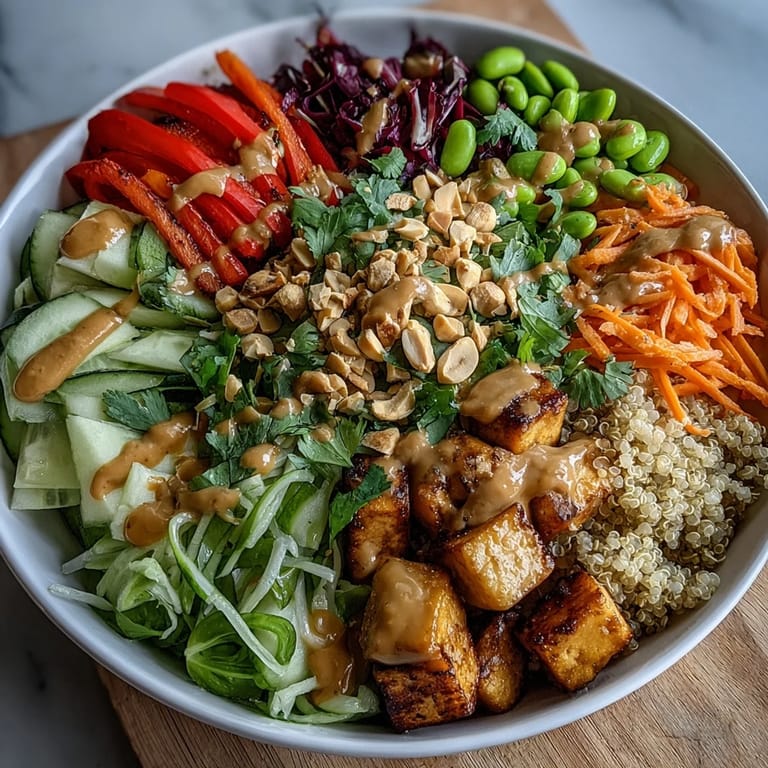
- Julienne the carrot, slice the bell pepper into thin strips, shred the cabbage, steam the edamame if frozen, slice the cucumber, and thinly slice the spring onions—arrange them in separate piles on your cutting board so they're ready to assemble.
- Bring it all together:
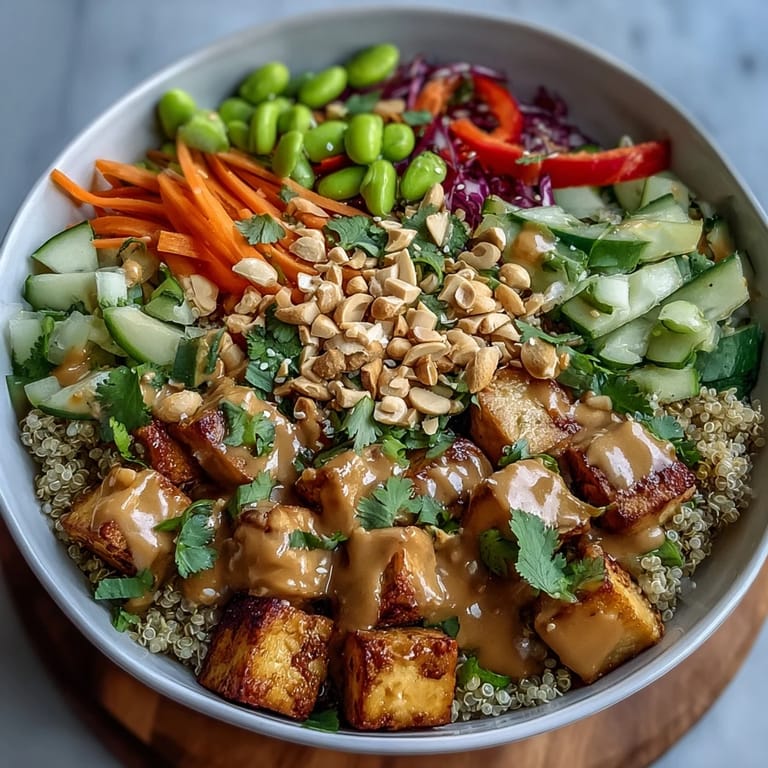
- Divide the fluffy grain among four bowls, then arrange the tofu and vegetables on top in whatever pattern feels right to you. Drizzle generously with peanut sauce, scatter roasted peanuts and sesame seeds over everything, and finish with fresh cilantro or mint if you have it.
- Eat immediately:
- The bowl is best served right away while the tofu is still warm and the vegetables maintain their crunch.
 Save
Save My roommate in college lived on instant ramen and drive-through meals, and I made this for her one particularly rough day when exams had her eating standing up at the sink. She sat down at the table—actually sat down—and ate the whole thing, and something shifted in how she talked about cooking. She started making it weekly and stopped saying she couldn't cook; turns out she just needed to start with something that tasted good enough to be worth the effort.
Tofu Texture Matters
The difference between disappointing and delicious tofu comes down to three things: pressing out moisture, coating it properly, and using enough heat. I've tried skipping the cornstarch and ended up with bland, chewy cubes that tasted like seasoned sponges. I've tried low heat and watched them steam into sadness instead of crisping. Once I committed to all three elements, the tofu became the reason people asked for seconds, not the thing they pushed to the side of the bowl.
Building Your Sauce
The peanut sauce is where this bowl moves from healthy to genuinely crave-worthy, and it's more forgiving than you'd think. Peanut butter naturally brings richness, soy sauce brings salt and umami, maple syrup balances with sweetness, and the acid from vinegar or lime juice wakes everything up. Start conservative with the spice—you can always add more sriracha to your own bowl, but you can't dial back chili flakes once they're in the shared pot.
Make-Ahead and Storage Magic
This bowl is one of those rare dishes that sometimes tastes better the next day because the sauce seeps into the grain and flavors deepen. I make four bowls on Sunday afternoon and eat them throughout the week—keeping the sauce separate in a small container so the vegetables don't get soggy. The assembled, refrigerated bowls stay fresh for three days, and you can reheat the tofu gently if you like it warm or eat it cold straight from the fridge.
- Store the peanut sauce in a separate container so you can control moisture and refresh tired vegetables with fresh sauce each morning.
- Hard-cook any grains or tofu that won't be used immediately, and store raw vegetables in airtight containers to maximize crispness.
- This freezes surprisingly well if you skip the cucumber and fresh herbs, which you can add after thawing and reheating.
 Save
Save This bowl reminds me that plant-based eating doesn't mean restriction or compromise—it means abundance and color and satisfaction. Make it once and you'll understand why it's become my go-to when I want to feel good and eat well.
Recipe FAQ
- → How do I get crispy tofu?
Press excess moisture from tofu, cube, then coat evenly in cornstarch. Bake at 200°C for 20–25 minutes, flipping halfway, or pan-fry until golden brown on all sides.
- → Can I make this gluten-free?
Yes. Substitute soy sauce with tamari and verify all packaged ingredients are certified gluten-free.
- → What grain alternatives work well?
Brown rice and quinoa are ideal. For lower carbs, try cauliflower rice. For variety, jasmine rice or forbidden rice also complement the flavors.
- → How long does the peanut sauce keep?
Store in an airtight container in the refrigerator for up to one week. The sauce may thicken—simply whisk in a teaspoon of warm water to restore consistency.
- → Can I prepare this in advance?
Absolutely. Cook grains and roast tofu ahead, then store separately. Prepare vegetables and sauce fresh or refrigerate in containers. Assemble when ready to serve.