 Save
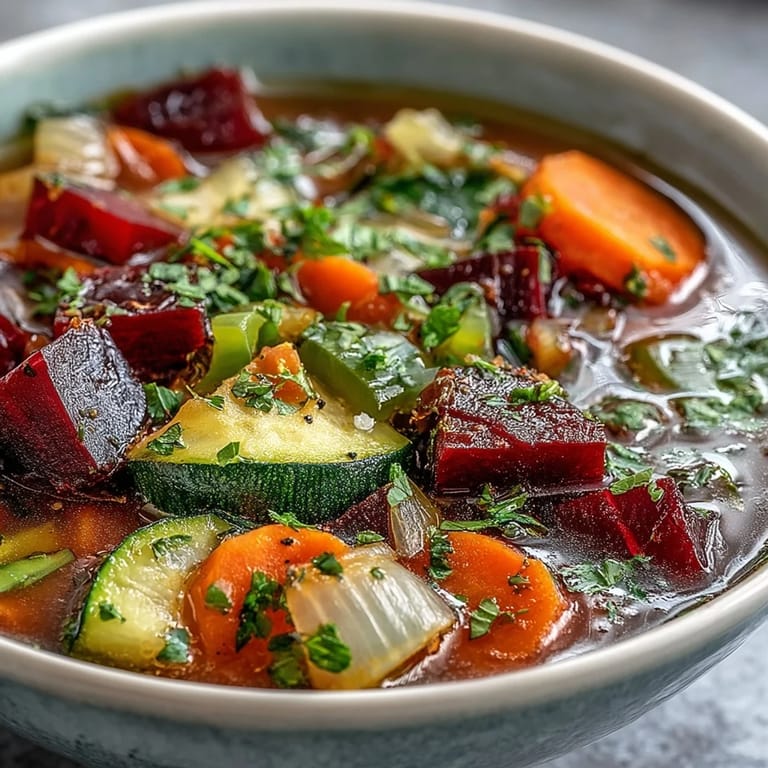
Save One afternoon, my kitchen filled with the most unexpected aroma—not from cooking, but from the raw ingredients I'd lined up on the counter. Beets stained my fingertips deep crimson, carrots glowed orange, and that green bell pepper sat there like a small emerald. I'd promised myself that week to eat better, to actually taste my food instead of rushing through meals, and somehow this rainbow soup felt like the beginning of something real. The colors alone seemed to promise vitality, and I was genuinely curious what my body would feel like after a week of this.
I made this for my neighbor who'd just moved in, and we ended up sitting on her front porch with bowls in our laps, talking about everything from her new job to my slightly chaotic garden. The soup was still steaming, and she kept pausing between spoonfuls to comment on how vibrant it tasted. That's when I realized this wasn't just about vegetables and broth—it was about nourishing someone, about the quiet ease of sharing something warm and real.
Ingredients
- Beetroot (1 medium): This gives the soup its gorgeous deep base and an earthy sweetness that balances everything else; don't skip the skin when peeling because it stains everything, but that's part of the charm.
- Carrots (2 medium): They soften beautifully during cooking and add natural sweetness that rounds out the earthier notes from the beets and herbs.
- Courgette or zucchini (1 medium): This vegetable keeps the soup light and adds a subtle tender texture without overwhelming the other flavors.
- Tomatoes (2 medium): Fresh tomatoes bring acidity and brightness that prevents the soup from feeling too heavy or one-dimensional.
- Green bell pepper (1): It adds a slight peppery note and another layer of color that makes each spoonful visually interesting.
- Red onion (1 small, finely chopped): The sharpness mellows during cooking and gives the broth a subtle sweetness underneath everything else.
- Garlic (2 cloves, minced): Two cloves is enough to smell it cooking without overpowering the delicate vegetable flavors.
- Vegetable broth (1.5 liters): Use low-sodium broth so you control the salt level and actually taste the vegetables rather than a salty background.
- Fresh parsley, dill, and basil: These herbs wake up the soup right at the end; fresh herbs make a shocking difference compared to dried, so invest in them if you can.
- Olive oil (2 tbsp): It carries flavor and helps everything cook evenly without sticking to the bottom of your pot.
- Lemon juice (from 1/2 lemon): This is the secret that makes people pause and ask what you did—it brightens everything without being obvious.
- Sea salt and black pepper: Always taste as you go and adjust at the very end; your palate knows better than any recipe.
Tired of Takeout? 🥡
Get 10 meals you can make faster than delivery arrives. Seriously.
One email. No spam. Unsubscribe anytime.
Instructions
- Heat your oil and soften the aromatics:
- Warm the olive oil in your pot over medium heat until it's shimmering slightly, then add the red onion and garlic. You'll know they're ready when the kitchen smells undeniably savory and the onion turns translucent at the edges, around 2 to 3 minutes.
- Build the deeper colors:
- Add the diced beetroot and sliced carrots to the pot, stirring occasionally for about 5 minutes. The beet juice will start bleeding into the oil, turning everything a warm reddish tone.
- Add the bright vegetables:
- Toss in the courgette, tomatoes, and green bell pepper, cooking for 3 to 4 minutes until they start to soften slightly. The steam rising from the pot should smell fresh and vegetal now, not just aromatic.
- Pour in the broth and bring to life:
- Add your vegetable broth all at once, stirring gently to combine, then turn the heat up until you see bubbles rapidly breaking the surface. Once it's boiling, reduce the heat down to a quiet simmer where just a few bubbles break the surface every few seconds.
- Let time do the work:
- Cover the pot loosely and let it simmer for 20 to 25 minutes, checking once or twice to make sure nothing's sticking to the bottom. The vegetables should be tender enough to break apart with the back of a spoon when they're ready.
- Finish with brightness:
- Stir in all the fresh herbs, the lemon juice, salt, and pepper, then taste a spoonful before deciding if it needs more seasoning. Trust yourself here—the lemon should be noticeable but not dominant, just enough to make the whole thing feel alive.
- Serve and share:
- Ladle into bowls while everything is still steaming hot, and if you want, scatter a few extra herb leaves on top.
 Save
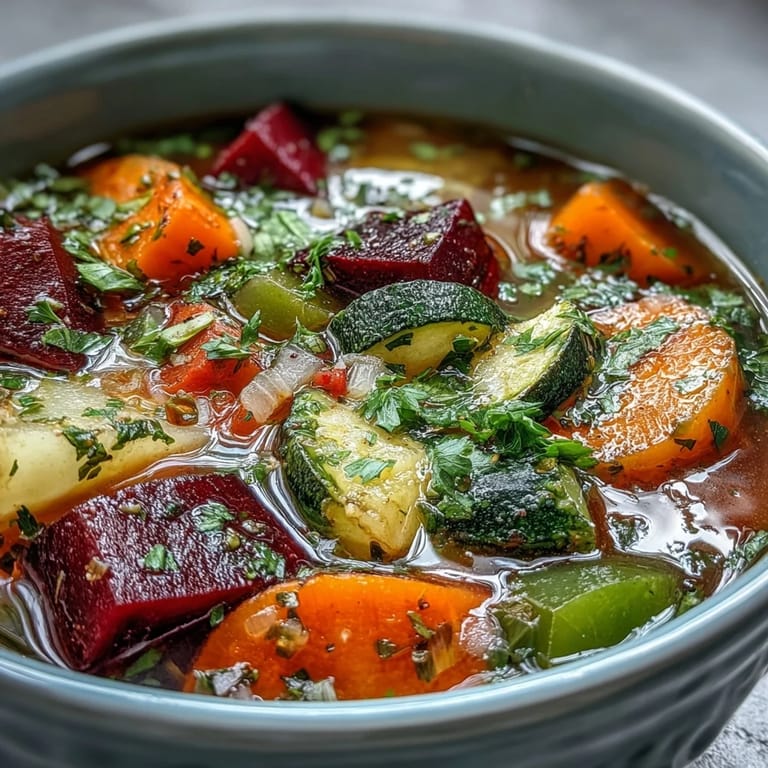
Save My sister came over feeling exhausted after a long month, and I had this soup waiting. She sat at the counter with a steaming bowl, not talking much at first, just slowly eating and breathing in the steam. By the third spoonful, something shifted in her shoulders, and she looked up and smiled in a way that made me understand that food is sometimes the best thing you can offer someone when words feel insufficient.
Timing and Flow in the Kitchen
The beauty of this soup is that once everything hits the pot, you can step back and let it do its thing. I usually chop my vegetables while the onion and garlic are sautéing, which means there's almost no standing around waiting. The whole process feels natural and unhurried, not one of those recipes where you're scrambling to keep up with the timing.
Making It Your Own
This recipe is honestly a starting point more than a rigid blueprint. I've added spinach when I had it, swapped the courgette for mushrooms another time, and even threw in some fresh ginger once because I was in that kind of mood. The core idea—colorful vegetables, bright herbs, good broth—stays solid, but the details can flex based on what's in your kitchen and what your body is asking for.
Variations and Storage Secrets
For a heartier meal, stir in some cooked lentils or chickpeas about 5 minutes before finishing, and the soup suddenly feels more substantial and grounding. If you prefer creamier texture, you can blend half the soup in a blender and stir it back in, which gives you the best of both worlds—smooth and chunky at once. This soup stores beautifully in the refrigerator for up to 4 days, and it actually tastes better after sitting for a day because the flavors have time to get properly acquainted.
- Frozen vegetables work just fine if fresh isn't available; just add them at the same time as the fresh ones.
- A slice of toasted whole-grain bread on the side transforms this into a complete, satisfying meal.
- If dried herbs are all you have, use about half the amount and add them during cooking rather than at the end.
 Save
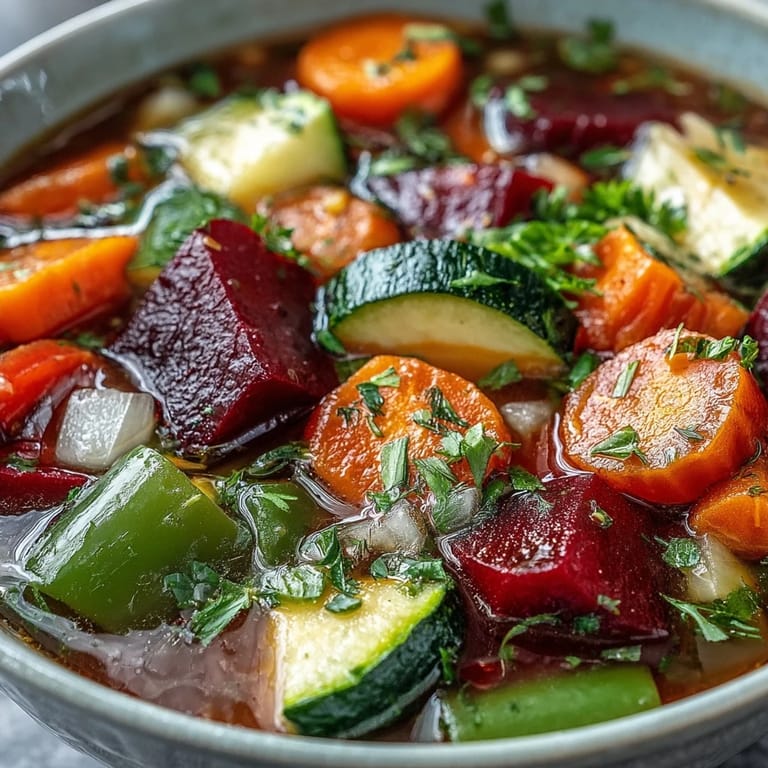
Save This soup reminds me that sometimes the simplest choices—whole vegetables, real herbs, a squeeze of lemon—can feel like the most nourishing thing you do for yourself. Make it when you need to feel cared for, share it when someone else does.
Recipe FAQ
- → Can I freeze this soup?
Yes, this soup freezes well for up to 3 months. Cool completely before transferring to airtight containers. Thaw overnight in the refrigerator and reheat gently on the stovetop.
- → What vegetables work best for detox?
Beetroot, carrots, and leafy greens are excellent for detox. This soup incorporates antioxidant-rich vegetables like tomatoes and bell peppers, along with cleansing herbs like parsley and dill.
- → How can I make this soup more filling?
Add cooked lentils, chickpeas, or quinoa for extra protein and fiber. Serving with whole-grain bread also makes it more substantial. A dollop of Greek yogurt works too if not dairy-free.
- → Can I use dried herbs instead of fresh?
Absolutely. Use dried herbs at half the quantity called for fresh. For example, use 1 teaspoon dried parsley instead of 2 tablespoons fresh. Add dried herbs earlier in cooking for flavor development.
- → Should I blend the soup?
It's up to you. Blending part creates a creamier texture while leaving some vegetables chunky adds substance. A full immersion blend makes it smooth and elegant for serving.