 Save
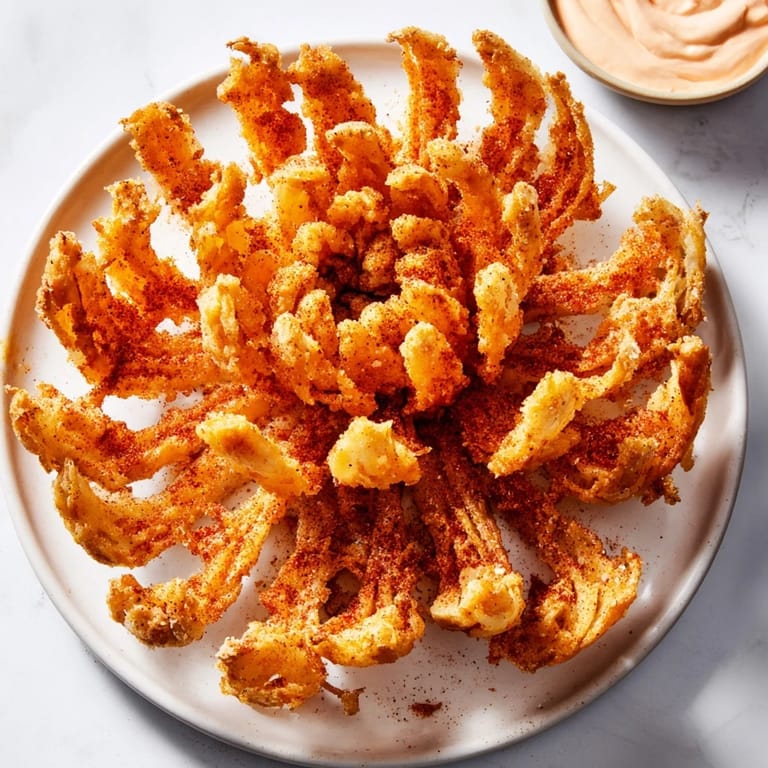
Save The first time I watched someone tear into a blooming onion, I was mesmerized. Those golden petals unfurled like something from a flower shop, crispy and steaming, and I knew right then I had to figure out how to make one at home. What started as curiosity turned into obsession, and after a few attempts (and one spectacular oil splattering incident), I cracked the code. Now it's become my go-to showstopper whenever I want to impress people without spending hours in the kitchen.
I made this for a dinner party last spring, and I'll never forget my friend's reaction when I pulled it from the oil and set it in the center of the table still sizzling. The whole room went quiet for a second, and then everyone leaned in at once. One person literally said, "I didn't know you could make restaurant food at home," and honestly, that comment lives rent-free in my head.
Ingredients
- 1 large sweet onion (Vidalia preferred): Sweet onions are less sharp and become tender and slightly sweet when fried, which is the whole point of this dish.
- 2 1/2 cups all-purpose flour: This creates the crispy coating; don't skip the double-dredging step or you'll lose that satisfying crunch.
- 2 teaspoons paprika, 1 teaspoon garlic powder, 1 teaspoon dried oregano, 1 teaspoon salt, 1/2 teaspoon black pepper, 1/2 teaspoon cayenne: These spices build layers of flavor that don't overpower the natural sweetness of the onion.
- 2 large eggs and 1 cup whole milk: This batter mixture acts as glue between the two flour coatings, giving you that incredible golden crust.
- Vegetable oil for frying: You need enough to submerge the whole onion, so don't be shy; I usually use about 4-5 cups depending on your pot size.
- 1/2 cup mayonnaise, 2 tablespoons sour cream, 1 tablespoon ketchup, 1 teaspoon horseradish, spices to taste: This sauce is the unsung hero; the horseradish adds a subtle kick that makes people wonder what makes it taste so good.
Tired of Takeout? 🥡
Get 10 meals you can make faster than delivery arrives. Seriously.
One email. No spam. Unsubscribe anytime.
Instructions
- Make the dipping sauce first:
- Whisk together the mayo, sour cream, ketchup, horseradish, smoked paprika, garlic powder, cayenne, salt, and black pepper in a small bowl. Refrigerate it while you work on the onion so the flavors have time to meld together.
- Prepare your onion like you're sculpting:
- Peel the onion, then trim 1/2 inch off the top (the stem end), leaving the root completely intact because that's what holds everything together. Place it cut-side down on your cutting board and, starting 1/2 inch from the root, make vertical cuts all the way around to create 12-16 petals, being careful not to slice through to the root.
- Turn it over and open it up gently:
- Flip the onion over and gently pull the petals apart with your fingers, taking your time so nothing breaks off.
- Build your flavor coating:
- Mix the flour with all the spices in one bowl and beat the eggs with milk in another. This double-coating technique is what gives you that restaurant-quality crunch.
- Dredge with intention:
- Coat the onion thoroughly in the flour mixture, making sure you get between all the petals, then shake off the excess. Dip it into the egg mixture next, making sure the coating seeps between the petals, then coat it again in flour, pressing gently so it adheres.
- Heat your oil to exactly 375°F:
- Use a thermometer here; if the oil is too cool, you get a greasy onion, and if it's too hot, the outside burns before the inside cooks. You want at least 3 inches of oil in your pot.
- Fry with patience:
- Carefully lower the onion cut-side down into the oil using a slotted spoon or spider. Fry for 6-8 minutes, turning occasionally, until it's golden brown and crispy all over.
- Finish strong:
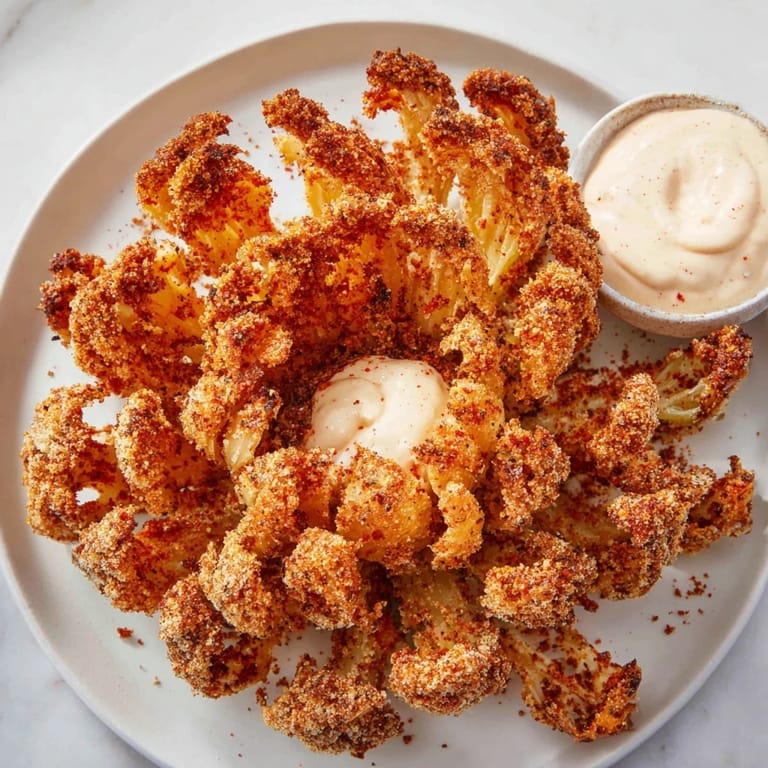
- Remove it from the oil, let it drain on paper towels, and season lightly with salt while it's still hot so it sticks.
 Save
Save There's something almost magical about watching this onion transform in the oil, watching those petals turn from pale to golden, and knowing that in just a few minutes you're going to have something that tastes like you trained at culinary school. That's the moment I fell in love with cooking for people.
Why This Onion Works
Sweet onions like Vidalia have a naturally high sugar content, which means they caramelize beautifully when they hit hot oil instead of turning acrid or bitter. The layers of the onion itself create little pockets where the batter gets crispy on the outside while the onion stays tender on the inside, giving you this incredible textural contrast. I learned this the hard way by once using a regular yellow onion and wondering why mine tasted sharp and a little off; switching to Vidalia changed everything.
The Sauce Is Everything
I used to think the dipping sauce was an afterthought, just something to slap on the side, but then I realized that's where a lot of people mess up. The horseradish is the secret ingredient that nobody expects; it gives you that subtle heat and complexity that makes people come back for bite after bite. The balance of tangy (sour cream), creamy (mayo), sweet (ketchup), and spicy (cayenne and horseradish) is what makes this sauce actually memorable instead of forgettable.
Temperature and Timing Secrets
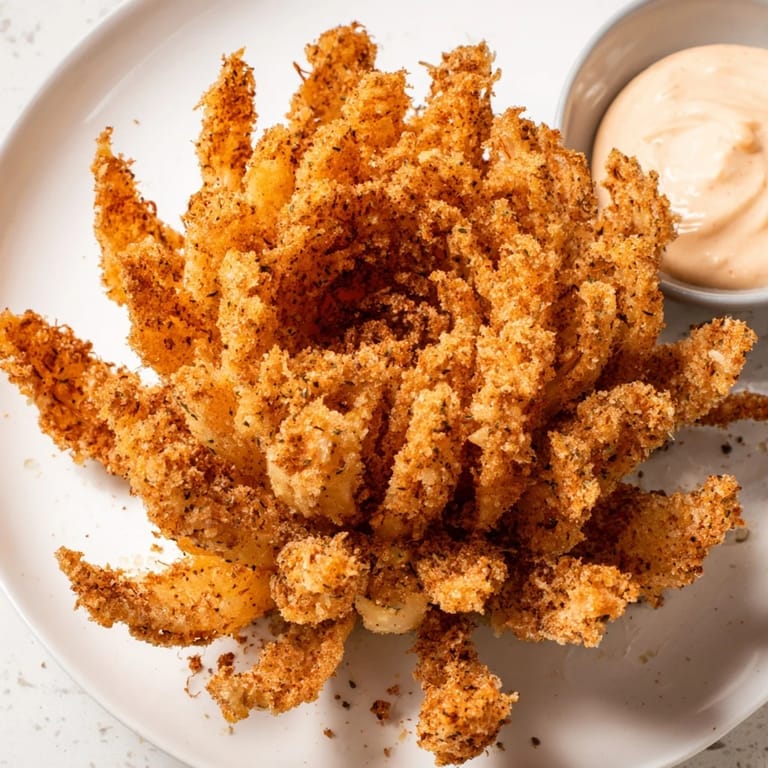
Oil temperature is honestly the most important variable in this entire recipe, and it's the one thing most home cooks overlook because they eyeball it instead of measuring. I've learned that 375°F gives you that perfect window where the outside gets crispy in about 7 minutes while the inside stays tender instead of turning mushy. The turning occasionally part isn't just busywork either; it helps the petals cook evenly and prevents any side from burning. One last thing I always do is season the onion with salt immediately after pulling it from the oil when it's still hot, because that's when the salt actually sticks instead of just sliding off cold skin.
- Always use a proper deep-fry or candy thermometer so you're not guessing on temperature.
- Keep a small bowl of extra flour nearby for patching any spots where coating flakes off before frying.
- If you're frying for a crowd, prep multiple onions and have your oil ready so you can do them back-to-back.
 Save
Save This recipe has a way of turning an ordinary night into something memorable, and I think that's the whole point of cooking for people. Serve it hot, watch it disappear, and enjoy the look on someone's face when they realize you made this magic in your own kitchen.
Recipe FAQ
- → How do I prepare the onion for frying?
Trim the top stem end, leaving the root intact. Slice the onion into 12-16 petals without cutting through the root, then gently separate the petals before coating.
- → What oil temperature is best for frying?
Heat vegetable oil to 375°F (190°C) to ensure a crispy golden crust without absorbing excess oil.
- → Can I make the dipping sauce ahead of time?
Yes, whisk all sauce ingredients together and refrigerate until serving to let flavors meld.
- → What spices enhance the batter for extra flavor?
Paprika, garlic powder, dried oregano, cayenne pepper, salt, and black pepper provide a balanced, savory kick.
- → Is a special tool needed to cut the onion?
A sharp chef’s knife works well, but a blooming onion cutter can simplify creating even petals.
- → How should leftovers be stored?
Keep leftovers refrigerated in an airtight container and reheat in an oven or air fryer for best texture retention.