 Save
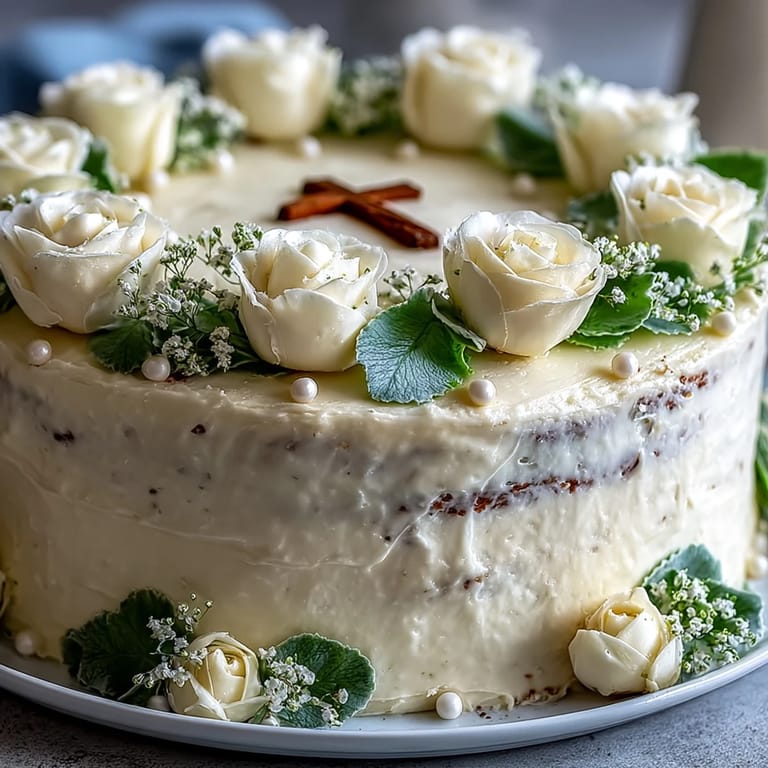
Save My sister called me in a panic two weeks before her daughter's First Communion, asking if I could bake a cake that felt both elegant and homemade. I'd never made a fondant rose before, but something about the occasion—that quiet milestone, the white dress hanging in a closet—made me want to try. This vanilla sponge cake with silky buttercream became my canvas for learning, and somehow the imperfect roses turned out to be the most beautiful part.
I remember standing in the kitchen at 6 AM on communion day, piping the last of the buttercream swirls, when my niece wandered in still in her pajamas. She watched silently for a moment, then whispered, "It looks like it's from a real bakery." That comment—from a seven-year-old who'd been awake since dawn with nervous energy—made every fondant petal worth the effort. She helped me place the cross on top, and I felt the weight of that small gesture.
Ingredients
- All-purpose flour (2 ½ cups): The foundation of your sponge; measure it by spooning into a cup and leveling off, not scooping directly from the bag, or your cake might turn dense.
- Baking powder (2 ½ tsp): This gives the cake that tender crumb and gentle lift without a heavy hand.
- Salt (½ tsp): A small pinch that makes the vanilla sing and balances the sweetness beautifully.
- Unsalted butter (1 cup for sponge, 1 ½ cups for frosting): Room temperature is non-negotiable; cold butter won't cream properly and you'll taste the difference in the texture.
- Granulated sugar (2 cups): The creaming process with butter is what creates that light, airy texture—don't rush those three minutes.
- Eggs (4 large): Room temperature eggs blend smoothly; cold ones can cause the batter to break and lose volume.
- Pure vanilla extract (1 tbsp for sponge, 2 tsp for frosting): Never use imitation; the flavor difference matters on a cake this simple and elegant.
- Whole milk (1 cup): Room temperature milk creates a silkier batter than cold milk straight from the fridge.
- Powdered sugar (5 cups): Sifting it before you start removes any lumps and makes your frosting impossibly smooth.
- White fondant (16 oz): Buy the best quality you can find; cheaper fondant becomes sticky and frustrating to work with.
- Edible pearls or dragees (optional): These catch the light and add a whisper of sophistication without stealing focus from the roses.
- Cross topper: Choose one that feels meaningful to you; some are edible, others decorative, and both work beautifully.
Tired of Takeout? 🥡
Get 10 meals you can make faster than delivery arrives. Seriously.
One email. No spam. Unsubscribe anytime.
Instructions
- Prepare your stage:
- Preheat the oven to 350°F and grease those cake pans generously, then line the bottoms with parchment paper cut to fit. This step feels tedious until you're sliding a perfect cake layer out of the pan in one piece.
- Combine the dry elements:
- Whisk your flour, baking powder, and salt together in a medium bowl. This distributes the leavening evenly so every bite rises with equal tenderness.
- Cream your butter and sugar:
- Beat them together until the mixture looks pale and fluffy, about three minutes—you're essentially whipping tiny air bubbles throughout, which is what makes the cake light. Stop and scrape down the bowl halfway through so you catch everything.
- Add eggs one at a time:
- Add each egg and beat well before adding the next; this ensures they're fully incorporated and your batter stays stable. Then mix in the vanilla and let it bloom for a moment.
- Alternate your wet and dry:
- Starting with the flour mixture and ending with it, alternate between adding the dry and the milk on low speed. Begin and end with flour so the batter stays cohesive; if you end with milk, it can become thin and loose.
- Divide and level:
- Split the batter evenly between pans and smooth the tops gently with a spatula. Equal layers bake evenly and stack without leaning.
- Bake with patience:
- Bake for 30 to 35 minutes; you'll know it's done when a toothpick comes out clean and the edges pull slightly from the pan sides. Let the cakes cool in the pans for 10 minutes so they set without cracking, then turn them out onto racks to cool completely—this takes about an hour, but rushing this step makes the cake fragile.
- Make your buttercream:
- Beat softened butter until creamy, then gradually add the powdered sugar so you avoid a flour-like cloud in your kitchen. Once the sugar is incorporated, add vanilla and salt, then milk or cream one tablespoon at a time until you reach a spreadable consistency.
- Build the cake:
- Level the cake layers if the tops are domed, then place the first layer on your cake board and spread a thin, even layer of buttercream on top. Set the second layer gently on top, pressing down just enough so it sits securely.
- Apply the crumb coat:
- Cover the entire cake with a thin first layer of buttercream to seal in any crumbs, then chill for 20 minutes. This extra step ensures your final frosting looks pristine and smooth.
- Frost with confidence:
- Apply a thick, final layer of buttercream and smooth it with an offset spatula dipped in warm water. Work slowly and let the spatula do the work rather than scrubbing; the cake is delicate underneath.
- Shape your fondant roses:
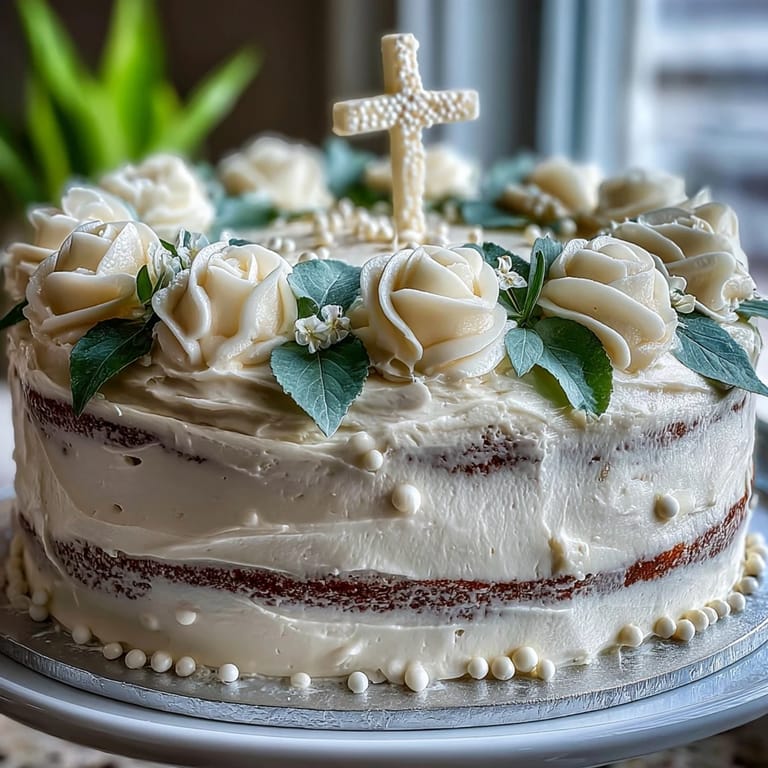
- Roll small balls of white fondant, flatten each into a thin petal shape, then layer them together, curling the edges slightly as you stack them. Start small and loose; the outer petals can be rougher, and the inner ones tighter—this is what makes them look alive.
- Add fondant leaves (if desired):
- Tint a small amount of fondant pale green and roll out thin leaves, using a knife to score veins down the center. Tuck them around the roses so they look as though they're supporting the flowers.
- Arrange and accent:
- Place your fondant roses and leaves on the cake however feels balanced to you, then scatter edible pearls or dragees around them. The cross topper goes at the center or wherever you'd like it to anchor the design.
- Chill until serving:
- Pop the cake into the refrigerator until it's time to serve; this keeps the frosting set and the fondant from softening in warm hands.
 Save
Save The night after the celebration, my sister texted me a photo of my niece sleeping with a small slice of leftover cake on a plate beside her bed—not the most hygienic choice, but it made me laugh until I cried. That cake became a tangible memory of a day that mattered, and somehow that felt like the real magic.
Why This Cake Feels Special
There's something about a vanilla cake that sounds simple but demands precision. It's not hiding behind chocolate or spices; it's just butter, sugar, eggs, and vanilla asking you to get each element right. This particular recipe respects that simplicity while giving you a cake that feels ceremonial without being difficult. The buttercream is forgiving enough that small imperfections fade once it's on the cake, and the fondant roses—even wonky ones—catch light and attention the way flowers should.
The Art of Fondant Roses
I won't lie and say fondant roses are effortless, but they're not impossible either. The trick is not overthinking them. Roll your little balls, flatten them thin enough that light comes through, layer them loosely, and let your fingers shape them as you go. The first rose will feel awkward; by the fifth one, your hands remember the motion. I've made roses that looked like crumpled tissue paper, and I've made ones that looked almost professional, and somehow both ended up looking beautiful on the cake because they're handmade and that matters.
Make It Your Own
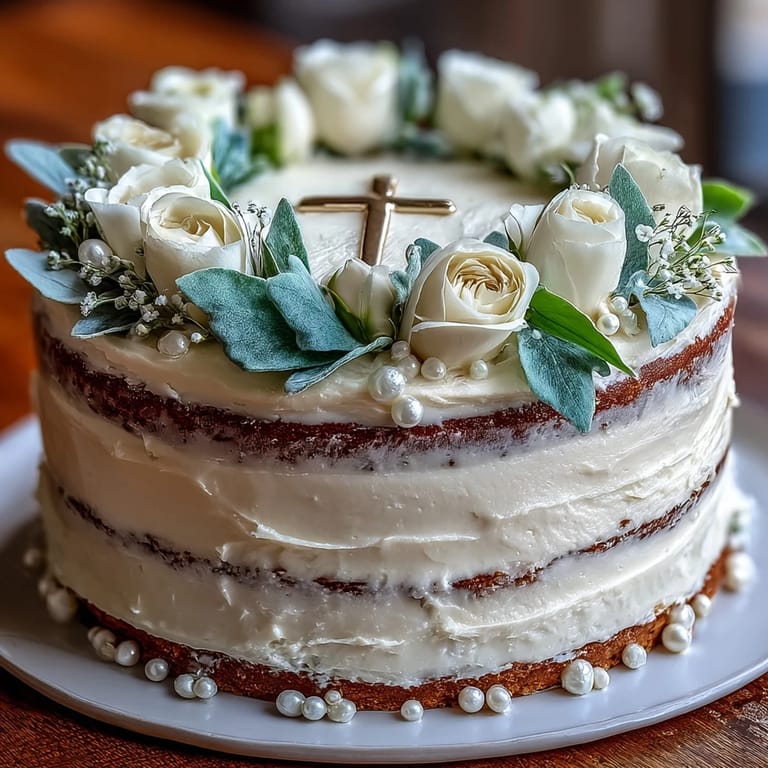
This cake is a blank canvas, and I love that about it. You can tint the buttercream pale pink or soft blue to match the celebration, add a hint of lemon zest or almond extract to the sponge for a different note, or scatter white chocolate shavings across the top for texture. Some bakers pipe the buttercream instead of smoothing it for a ruffled look; others keep it minimal and geometric. There's no wrong version of this cake as long as it feels true to the person or moment you're celebrating.
- Lemon zest or almond extract can slip into the sponge for subtle flavor without overshadowing the vanilla.
- White chocolate shavings add texture and elegance if you want more visual interest on the finished cake.
- If fondant feels too ambitious, you can decorate with fresh flowers and buttercream piping instead, which looks just as beautiful.
 Save
Save This cake is for the moments that matter—the small ceremonies, the quiet milestones, the days we want to remember. Baking it with your own hands means something, and I hope whoever tastes it feels that care in every bite.
Recipe FAQ
- → What flour works best for the sponge layers?
All-purpose flour is ideal for a tender and structured vanilla sponge, ensuring a soft crumb with good rise.
- → How can I achieve smooth buttercream frosting?
Beat softened butter until creamy before gradually adding sifted powdered sugar, vanilla, and a pinch of salt. Adding milk or cream slowly helps reach perfect spreading consistency.
- → What is the best way to shape the fondant roses?
Roll small fondant balls, flatten and shape each petal delicately, then assemble petals layer by layer for realistic white roses.
- → Can I substitute ingredients for dietary needs?
Yes, use a gluten-free flour blend to accommodate gluten sensitivities, or replace half the butter with vegetable oil for a lighter texture.
- → How long should the cake be chilled before decorating?
After applying a thin crumb coat, chill the cake for about 20 minutes to firm it up and ensure a smooth final layer.
- → What additional decorations enhance the cake’s look?
Edible pearls, silver dragees, and green-tinted fondant leaves add elegant accents complementing the white roses and cross topper.