 Save
Save My neighbor stopped by last spring with a bundle of farmer's market asparagus and mentioned offhand how her grandmother used to make this casserole every Easter. Something about the way she described it—the cream sauce clinging to tender spears, cheese bubbling at the edges—stuck with me. I tested it that weekend, and the smell alone made me understand why it had lasted generations. Now I make it whenever I want to feel like I'm in a warm kitchen with people I love.
I remember bringing this to a potluck where someone's casserole broke in transit, leaving them embarrassed. I quietly slid mine onto the table, and within minutes it was half-gone. The person whose dish broke later told me asparagus casserole was their childhood favorite but they'd never thought to make it themselves. We swapped recipes that day.
Ingredients
- Fresh asparagus (1 lb, trimmed): Look for firm spears with tightly closed tips and a bright green color—these will blanch perfectly and hold their shape in the cream sauce.
- Unsalted butter (2 tbsp + 1 tbsp melted): Unsalted lets you control the salt and flavor, and it creates a silky roux without overpowering the delicate asparagus.
- All-purpose flour (2 tbsp): This thickens the cream sauce into something velvety rather than puddingy—don't skip the whisking.
- Whole milk (1 cup) and heavy cream (1/2 cup): The combination of both gives richness without being heavy, creating a sauce that coats the asparagus like silk.
- Gruyère or Swiss cheese (1 cup, divided): Gruyère has a nutty depth that makes this casserole feel special, and dividing it lets you build flavor from the sauce through to the golden top.
- Parmesan cheese (1/4 cup, grated): This adds sharpness and helps the topping turn that perfect golden brown.
- Salt, black pepper, and nutmeg: Just a whisper of nutmeg bridges the gap between savory and luxurious—trust it.
- Fresh breadcrumbs (1/2 cup) tossed with melted butter: Fresh breadcrumbs stay tender rather than hard, creating a topping that's crispy outside and soft within.
Tired of Takeout? 🥡
Get 10 meals you can make faster than delivery arrives. Seriously.
One email. No spam. Unsubscribe anytime.
Instructions
- Ready your stage:
- Preheat the oven to 400°F and lightly butter a medium baking dish. Setting yourself up now means you won't be juggling hot pans and a cold baking dish later.
- Blanch the asparagus:
- Bring a large pot of salted water to a boil and add the asparagus. After 2 to 3 minutes, the spears will turn bright green and bend slightly when lifted—that's your signal to drain and pat them completely dry. Any water clinging to them will dilute your cream sauce.
- Build your sauce foundation:
- Melt the butter in a medium saucepan over medium heat, then whisk in the flour for about 1 minute, stirring constantly until it becomes a pale paste. This roux is what transforms liquid cream into something with body.
- Create the cream sauce:
- Gradually whisk in the milk and cream, keeping the heat steady and the whisking constant for 3 to 4 minutes until the sauce thickens enough to coat the back of a spoon. You'll feel the moment it goes from thin to silky.
- Season and finish the sauce:
- Remove from heat and stir in half the Gruyère and all the Parmesan, then add salt, pepper, and just a pinch of nutmeg. The cheese will melt into something smooth and richly flavored.
- Assemble the casserole:
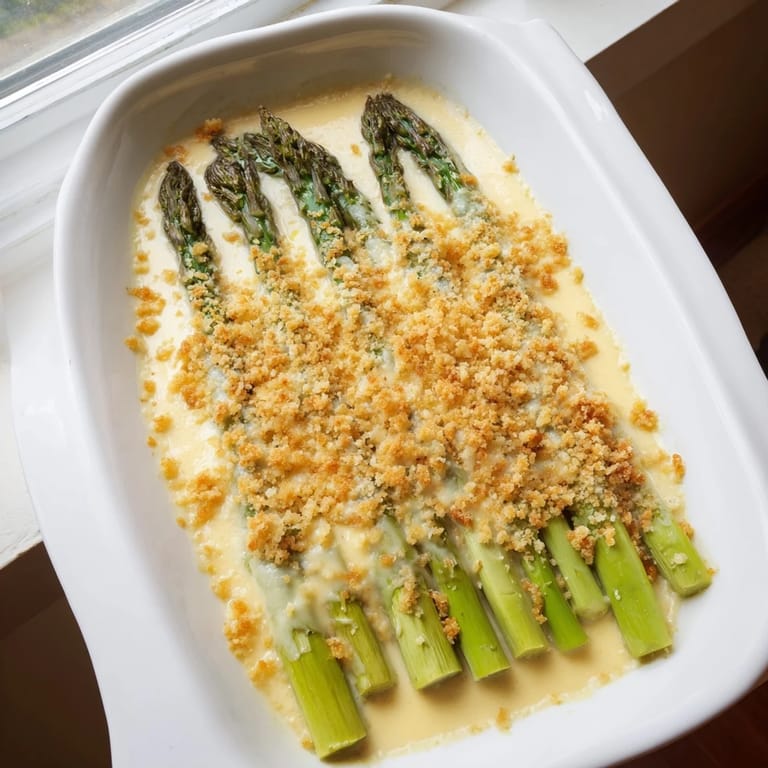
- Arrange the drained asparagus in your prepared dish, pour the cheese sauce evenly over the top, and sprinkle the remaining Gruyère across the surface. This layering lets every bite taste like cheese, asparagus, and cream together.
- Prepare and add the topping:
- Toss the breadcrumbs with melted butter in a small bowl until they're evenly coated, then sprinkle them across the top. Buttered breadcrumbs turn golden rather than pale, signaling that your casserole is perfectly baked.
- Bake until golden:
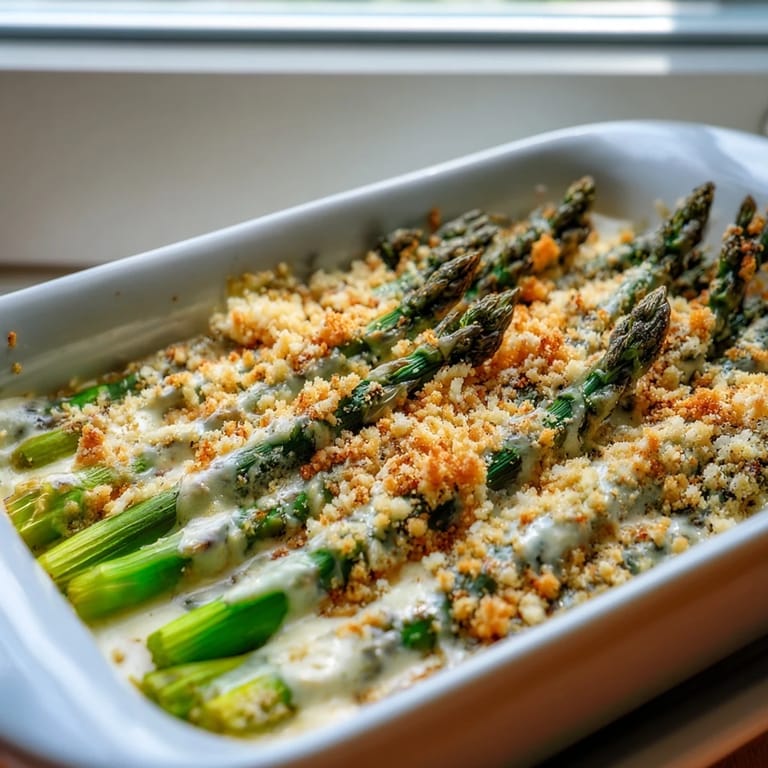
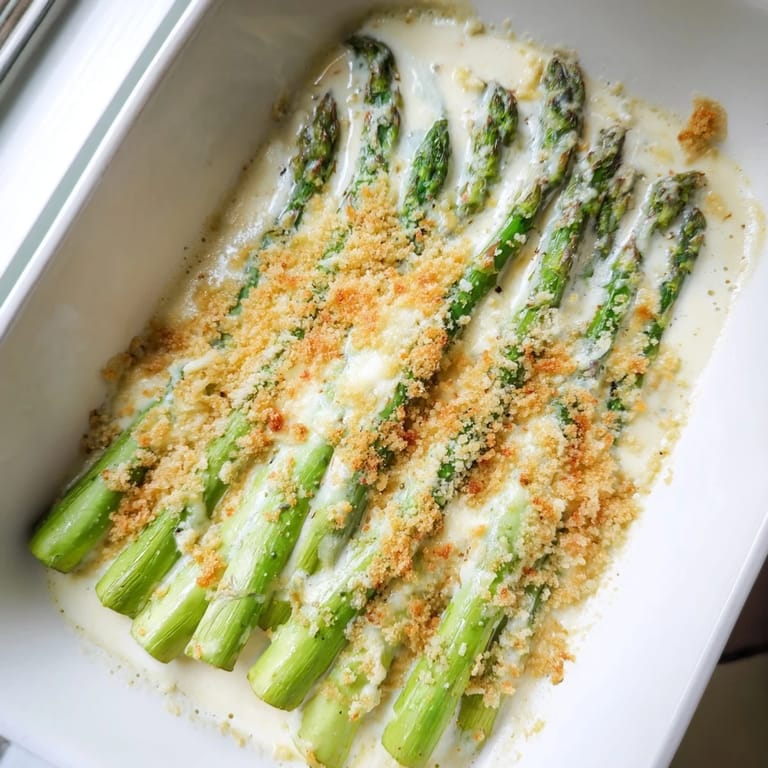
- Slide into the oven for 20 to 25 minutes, watching for the edges to bubble and the top to turn golden brown. You'll know it's done when it smells irresistible and looks like something from a Sunday dinner table.
- Rest before serving:
- Let it sit for 5 minutes—this isn't wasted time, it's when the casserole sets enough to hold together when you scoop it out.
 Save
Save I made this for my sister after she mentioned craving something that tasted like home, and watching her close her eyes after the first bite reminded me why cooking for people matters. Food is memory made edible, and this casserole tastes like every springtime dinner that ever mattered.
Why Fresh Asparagus Makes All the Difference
The quality of your asparagus determines whether this dish sings or simply satisfies. Farmer's market spears, cut that morning, have a grassy sweetness that grocery store asparagus can't match no matter how perfect the sauce. If you're buying from a supermarket, choose the thinnest spears you can find—they blanch faster and have a tender texture that thick stalks never achieve. Room-temperature asparagus coming straight from the fridge will take longer to cook, so let it sit on the counter for a few minutes before blanching.
Variations That Keep It Interesting
Once you've made this classic version a few times, the casserole becomes a canvas for your own kitchen experiments. A pinch of garlic powder whisked into the sauce adds an earthy note that makes people ask what you did differently. Chopped fresh chives or dill mixed into the breadcrumb topping bring brightness that cuts through the richness. Some nights I swap cheddar for Gruyère when that's what I have, and while the flavor shifts slightly toward childhood comfort, it's still undeniably delicious. You can even add a thin layer of sliced mushrooms or caramelized onions between the asparagus and sauce if you want to build the flavor profile deeper.
Serving Ideas and Pairing Suggestions
This casserole works equally well as a main event or as supporting actor. Roasted chicken or a simple baked salmon both fade into the background next to it, letting the asparagus shine. Serve it alongside crusty bread to soak up the leftover sauce, or pair it with a bright salad if you want to balance the richness. For vegetarian dinners, add a grain like farro or wild rice on the side to make it more substantial. Even leftover casserole heated gently in a low oven tastes wonderful the next day—sometimes better, as the flavors have had time to meld.
- A glass of dry white wine like Sauvignon Blanc or Chablis is the perfect companion at the table.
- Make this for spring dinners, Easter celebrations, or any moment when you want to feel like someone cares.
- Leftover casserole keeps in the refrigerator for up to three days and reheats beautifully at 350°F.
 Save
Save There's something timeless about sitting down to a bowl of this casserole, knowing that the same combination of fresh vegetables, cream, and cheese has been comforting people for generations. Make it for someone you love.
Recipe FAQ
- → How do I prepare asparagus for baking?
Trim the tough ends and blanch the asparagus in boiling salted water for 2-3 minutes until bright and tender. Drain and dry before arranging in the baking dish.
- → What cheeses work best in this dish?
Gruyère provides a nutty flavor that melts beautifully; Parmesan adds sharpness. Mozzarella or cheddar can be used as alternatives for a milder taste.
- → Can I make the sauce ahead of time?
Yes, prepare the creamy cheese sauce up to a day in advance and refrigerate. Reheat gently before pouring over asparagus and baking.
- → How to achieve a crispy breadcrumb topping?
Toss fresh breadcrumbs with melted butter before sprinkling evenly over the casserole. This ensures a golden, crunchy crust after baking.
- → What flavor variations can I try?
Add a pinch of garlic powder to the sauce or mix chopped fresh chives into the breadcrumb topping for extra aroma and flavor.