 Save
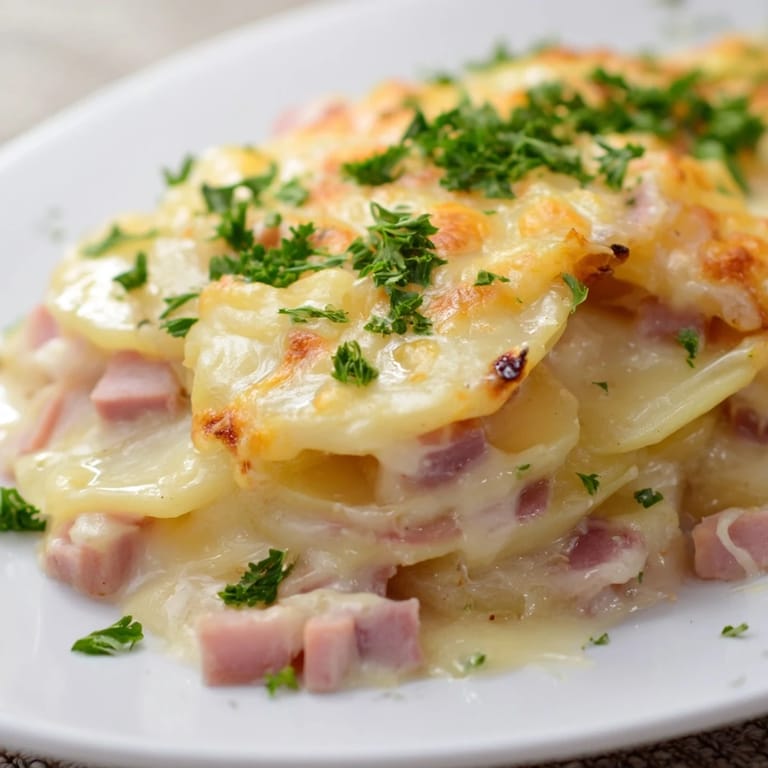
Save My aunt pulled this dish out of her oven on Christmas Eve, and the kitchen filled with this golden, creamy aroma that made everyone stop talking. I was maybe twelve, and I'd never seen potatoes look so elegant—layered like they meant something. Years later, I finally asked for her recipe, and what I discovered was that the magic wasn't complicated at all, just butter, cream, cheese, and patience. Now when I make scalloped potatoes with ham, I think about that moment and how food has a way of becoming a memory before you even take a bite.
I made this for a dinner party once and worried the whole time that it wouldn't be impressive enough, but watching my guests go back for thirds told me everything I needed to know. There's something about a warm, bubbling casserole that brings people together in a way fancier dishes sometimes miss.
Ingredients
- Yukon Gold or Russet potatoes (1.5 kg): Waxy Yukon Golds hold their shape beautifully, but Russets give you a slightly creamier texture; slice them thin on a mandoline if you have one, or take your time with a sharp knife for even cooking.
- Cooked ham (250 g): Good quality ham makes all the difference—ask the deli counter for a thick slice you can dice yourself rather than pre-packaged if you can.
- Unsalted butter (60 g): Unsalted lets you control the saltiness of the sauce; it also browns slightly and adds a subtle depth.
- Medium onion and garlic cloves: The onion should be finely chopped so it melts into the sauce rather than staying chunky.
- All-purpose flour (50 g): This is your thickening agent; don't skip the whisking step or you'll end up with lumps.
- Whole milk and heavy cream (700 ml and 120 ml): The combination matters—milk alone tastes thin, but cream alone feels heavy; together they're balanced and luxurious.
- Salt, black pepper, and nutmeg: The nutmeg is subtle but transforms everything; don't be shy with it, and taste as you go.
- Gruyère, sharp cheddar, and Parmesan cheeses (200 g, 100 g, 30 g): Gruyère melts smoothly, cheddar brings sharpness, and Parmesan on top gets those golden, crunchy bits—use quality cheese if possible.
- Fresh parsley (optional): A green garnish adds color and a fresh note that cuts through the richness.
Tired of Takeout? 🥡
Get 10 meals you can make faster than delivery arrives. Seriously.
One email. No spam. Unsubscribe anytime.
Instructions
- Get your dish ready:
- Preheat the oven to 180°C and butter your baking dish thoroughly so nothing sticks. Having everything prepped before you start cooking means you won't be hunting for ingredients while your sauce is on the heat.
- Build the flavor base:
- Melt butter over medium heat, add the chopped onion, and let it soften for 3–4 minutes until it's translucent and smells sweet. Stir in the garlic and cook for just one more minute—garlic burns quickly and turns bitter, so don't walk away.
- Make the roux:
- Sprinkle flour directly into the butter and onion mixture, then whisk constantly for 1–2 minutes until it looks like wet sand and smells toasty. This step prevents lumps later and adds a subtle nutty flavor to the sauce.
- Combine milk and cream slowly:
- Gradually pour in the milk and cream while whisking continuously, moving the whisk in steady circles to break up any flour that wants to clump. The slower you pour, the smoother your sauce will be.
- Thicken and season:
- Let the sauce simmer for 3–4 minutes, stirring gently, until it coats the back of a spoon. Season with salt, pepper, and a good pinch of nutmeg, then remove from heat and stir in half the Gruyère and cheddar—the residual heat melts them perfectly.
- Layer with intention:
- Spread half the potatoes across the bottom of the baking dish, scatter half the ham over them, and pour half the sauce over that layer. Then repeat with the remaining potatoes, ham, and sauce; it should fill the dish snugly but not overflow.
- Top and cover:
- Sprinkle the remaining Gruyère and cheddar across the top, then finish with the Parmesan—this creates three layers of cheese that toast beautifully. Cover everything with foil and slide it into the oven.
- The covered bake:
- Bake covered for 45 minutes so the potatoes steam and soften without the top browning too fast. The foil is your friend here; it keeps everything moist.
- Finish with color:
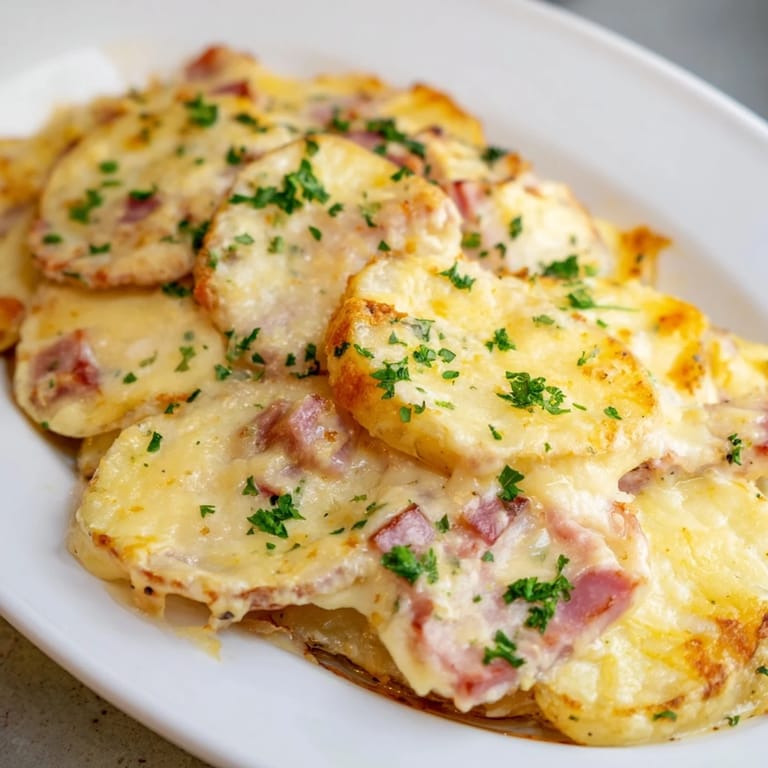
- Remove the foil and bake for another 25–30 minutes until the top is golden and bubbling at the edges and a knife slides through a potato easily. You're looking for that crust, but not burnt.
- Rest and serve:
- Let the dish sit for 10 minutes after it comes out of the oven—this helps it set so it doesn't fall apart when you serve it. Scatter parsley on top if you're using it, and watch people's faces light up.
 Save
Save I learned the hard way that this dish deserves real Gruyère and fresh cream, not shortcuts. The first time I made it, I used whatever was on sale, and it tasted more like school cafeteria than comfort food—now I treat the ingredients with respect, and it shows.
Why Temperature and Timing Matter
Ovens vary wildly, and that 25–30 minute range for the uncovered bake isn't random—it's the window where your potatoes reach that perfect tender state and the cheese on top goes from pale to golden. If your oven runs hot, check it at 20 minutes; if it runs cool, you might need the full 30. The foil on the first 45 minutes is important because potatoes need gentle steam to cook through, and exposed heat would dry out the top before the insides soften.
Making It Ahead and Variations
This dish is one of the rare recipes that actually improves when assembled the day before—the flavors meld and the potatoes absorb some of the sauce, making every bite more flavorful. You can assemble it in the morning, cover it tightly, refrigerate it, and bake it straight from cold when you're ready; just add about 10 extra minutes to the cooking time since it starts colder. If ham isn't your thing, smoked turkey or diced chicken work beautifully, and some people swear by adding a tiny pinch of cayenne pepper to the sauce for a whisper of heat.
Serving Suggestions and Final Thoughts
Serve this alongside a crisp green salad or roasted vegetables to balance the richness, and pour a glass of something medium-bodied to drink alongside it. This is the kind of food that makes people feel cared for, and honestly, that's the real recipe.
- Cut squares with a sharp knife dipped in hot water between cuts to prevent the cheese from dragging.
- Leftovers reheat beautifully in a low oven at 150°C, covered with foil so they don't dry out.
- Double the recipe easily if you're feeding a crowd; just use a larger baking dish and add about 15 minutes to the covered bake time.
 Save
Save This is the kind of dish I return to when I need to feed people something warm and genuine. It never fails to deliver comfort in its most honest form.
Recipe FAQ
- → What type of potatoes work best for scalloped layers?
Yukon Gold or Russet potatoes are ideal for layering, as they hold their shape well and absorb flavors beautifully.
- → Can the ham be substituted with other meats?
Yes, smoked turkey or chicken can be used as alternatives for a different flavor and protein option.
- → How do I ensure a smooth, lump-free cheese sauce?
Prepare a roux by cooking flour in butter first, then gradually whisk in milk and cream while stirring constantly to avoid lumps.
- → What cheeses create the best flavor combination here?
Using a blend of Gruyère, sharp cheddar, and Parmesan provides a rich, balanced cheese sauce with depth and sharpness.
- → Can this dish be prepared ahead of time?
Yes, you can assemble the layers a day in advance, keep it refrigerated, and bake right before serving to save time.
- → How do I achieve a golden crust on top?
Baking covered initially keeps the layers moist, then uncovering during the last 25-30 minutes allows the cheese to brown beautifully.