 Save
Save There's something about the way au gratin potatoes emerged from my neighbor's oven one autumn evening that changed how I think about simple ingredients. The golden crust caught the last light coming through her kitchen window, and the smell—butter, cream, garlic, melting cheese—felt like an invitation I couldn't refuse. She'd learned the recipe from her grandmother in Lyon, and watching her layer those potatoes with such practiced ease made me realize this wasn't just comfort food; it was edible tradition. When she finally pulled it from the oven and let it rest, steam rising in waves, I understood why this dish has endured for generations.
I made this for my partner on a night when everything felt too heavy, and something about the ritual of layering potatoes and pouring cream felt meditative and grounding. By the time the cheese melted into that gorgeous crust, the whole apartment smelled like we'd somehow brought a Parisian bistro into our kitchen. It became one of those dishes that marks a memory—not fancy, but somehow perfect.
Ingredients
- Yukon Gold or Russet potatoes (1.5 kg / 3 lbs): Slice them thin and uniform—a mandoline makes this effortless, though a sharp knife works if you're patient and focused. The thinness matters because it lets the cream penetrate and the potatoes soften evenly.
- Garlic (2 cloves): Mince it finely so it dissolves into the cream sauce rather than appearing as sharp little pieces. Fresh garlic makes all the difference here.
- Unsalted butter (60 g / 4 tbsp): Use real butter; it's the foundation of your sauce and deserves quality. Melt it slowly to build flavor.
- Heavy cream (500 ml / 2 cups): Don't reach for light cream or half-and-half; the fat content is what creates that silky texture that coats each potato slice.
- Gruyère cheese (240 g / 2 cups): The star here—nutty, complex, and it melts into the cream without becoming stringy. This cheese is worth seeking out.
- Parmesan cheese (60 g / ½ cup): It adds sharpness and helps create that crackling golden crust on top.
- Salt, black pepper, nutmeg: Season boldly but taste as you go; the nutmeg is optional but it adds warmth that makes people pause and ask what that subtle spice is.
Tired of Takeout? 🥡
Get 10 meals you can make faster than delivery arrives. Seriously.
One email. No spam. Unsubscribe anytime.
Instructions
- Prepare your canvas:
- Preheat the oven to 190°C (375°F) and butter your baking dish generously so nothing sticks. This step feels small, but it matters more than you'd think.
- Build the foundation:
- Melt butter over medium heat and let the garlic whisper into it for about a minute until the smell hits you—that's when you know it's ready. Pour in the cream and season it carefully, letting it simmer just enough to warm through before you remove it from heat.
- Layer with intention:
- Spread half your potato slices into the dish, slightly overlapping them so they nestle together. Pour half the cream sauce over evenly, then scatter half your cheese mixture across the top.
- Complete the layers:
- Repeat with the remaining potatoes, cream, and cheese, distributing each layer as if you're building something meant to last.
- The covered phase:
- Cover everything with foil and slide it into the oven for 40 minutes—the foil keeps the top from browning too fast while the potatoes steam and soften underneath. Listen; you'll hear a gentle bubbling starting to happen.
- The golden reveal:
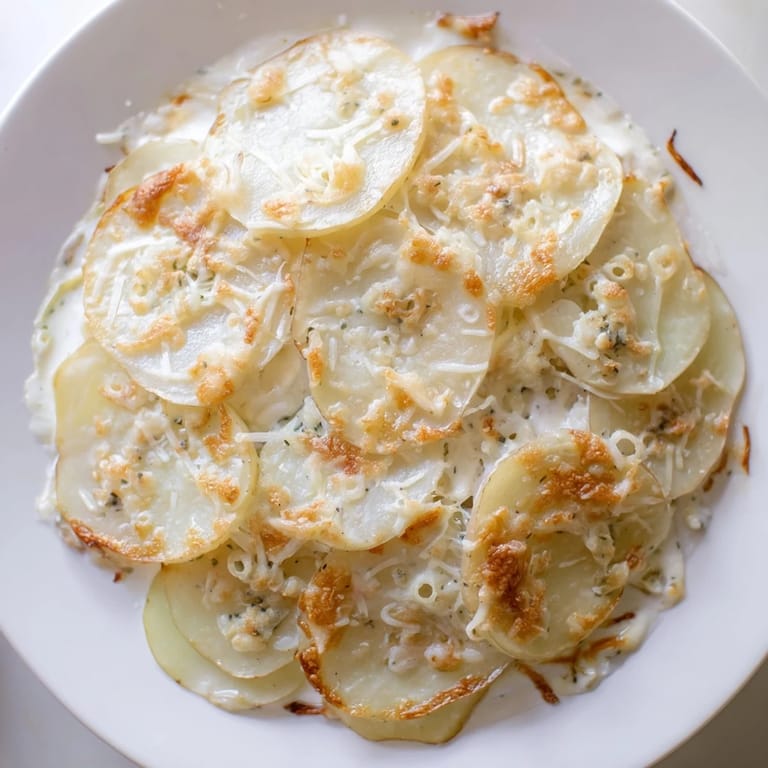
- Remove the foil and bake for another 20 minutes until the top turns deep golden and a fork slides easily through the potatoes. The cheese should be slightly puffed and the edges might show little wisps of caramelization.
- The hardest part:
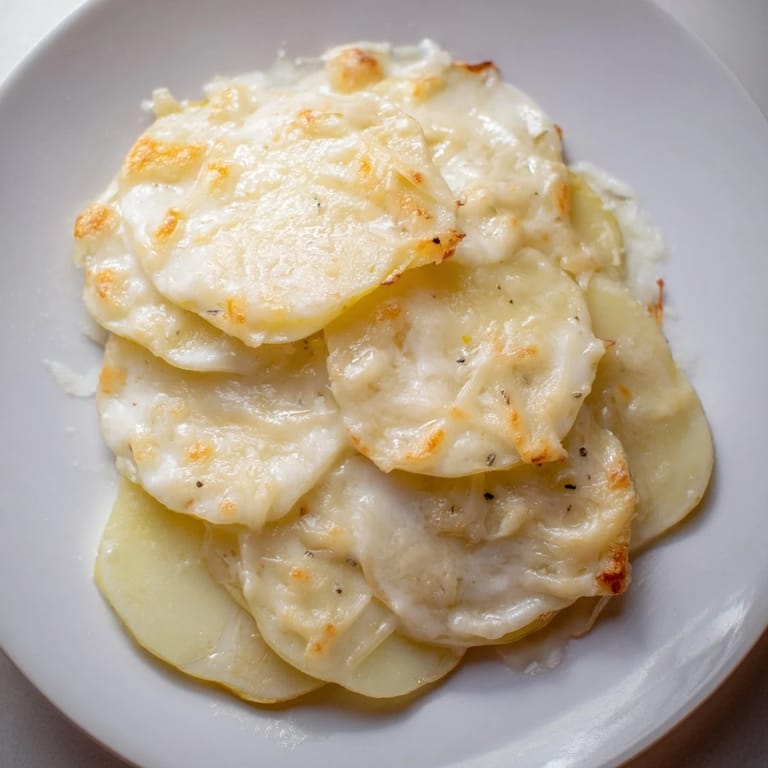
- Let it rest for 10 minutes before serving—this lets the cream set just enough so it won't run all over the plate, and it's also the moment you need patience most.
 Save
Save Years later, I understand why this dish appears on so many tables during moments that matter. It's not complicated, but it requires attention—the kind of attention that says you care about feeding someone well. That's when food becomes more than sustenance; it becomes a small act of devotion.
The Secret to Perfect Texture
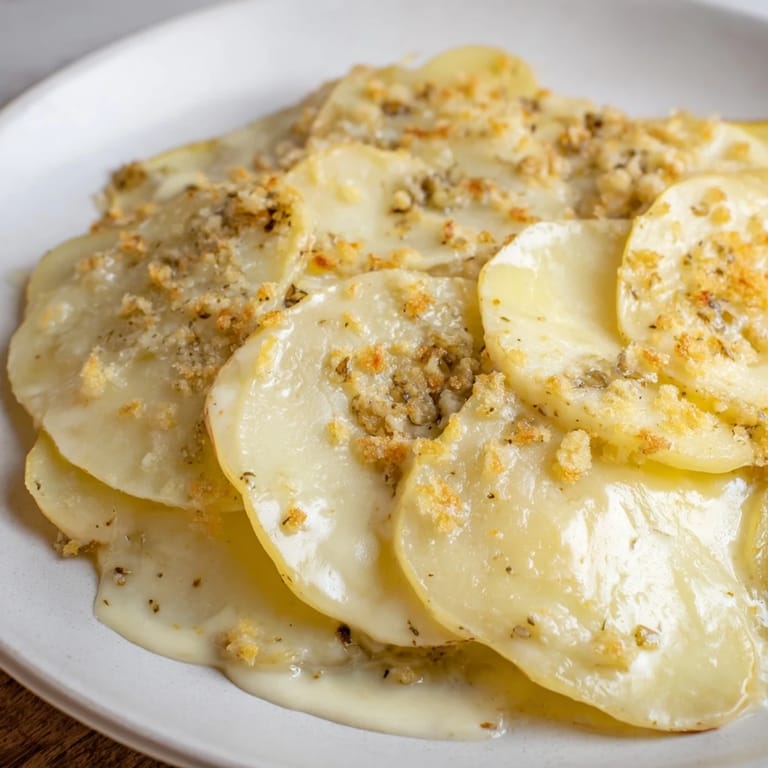
The difference between creamy and chalky au gratin potatoes comes down to one thing: not rushing the cream. When you heat your cream mixture too quickly or too hot, the proteins can break and you end up with a grainy sauce that separates. Keep the heat moderate, let the butter and cream get acquainted, and you'll end up with something silky and luxurious that clings to every potato slice like it was meant to.
Cheese Choices and What They Mean
Gruyère is traditional because it melts smoothly and adds depth without screaming for attention. But you're not locked into it—sharp cheddar brings brightness, Emmental adds a slightly sweet nuttiness, and a blend of both gives you complexity. I once used a combination of Gruyère and smoked cheddar on a whim, and it became my favorite version because it added character without losing elegance. The important thing is using cheese that actually tastes good on its own; cheap cheese will only ever taste cheap.
Making It Your Own
The bones of this recipe are solid, but the magic happens when you start personalizing it. Some people layer thin slices of prosciutto between the potatoes, others add fresh thyme or rosemary for herbaceous notes. I've seen versions with leeks, caramelized onions, and even truffle oil drizzled between layers. The recipe welcomes these additions because the cream and cheese are generous enough to share the spotlight.
- Fresh thyme between the layers adds an earthy note that makes the whole dish feel more refined.
- A pinch of cayenne in the cream gives a subtle heat that people often can't quite identify but always appreciate.
- Nutmeg might seem strange, but even just a whisper of it adds a warmth that makes the potatoes taste more like themselves.
 Save
Save This is the kind of recipe that lives in your kitchen forever once it finds a place in your heart. Make it, share it, adjust it until it feels like yours, and watch as it becomes the dish people request when they want to feel cared for.
Recipe FAQ
- → What type of potatoes work best?
Yukon Gold or Russet potatoes are ideal for their texture and ability to absorb the creamy sauce while maintaining shape during baking.
- → Can I substitute the cheese?
Gruyère can be replaced with sharp cheddar or Emmental for different flavor profiles without compromising the creamy finish.
- → How should the garlic be prepared?
Minced garlic is gently sautéed in butter to release its aroma and flavor before mixing with cream, ensuring a fragrant sauce.
- → What baking dish size is recommended?
A 23x33 cm (9x13 inch) baking dish provides the right depth for layering and even baking of the potatoes and sauce.
- → How to achieve the perfect golden crust?
Bake covered for 40 minutes, then uncover for the final 20 minutes to allow the cheese topping to bubble and brown beautifully.
- → Can I add herbs for extra flavor?
Adding fresh thyme between layers adds subtle herbal notes that complement the creamy cheese and garlic.