 Save
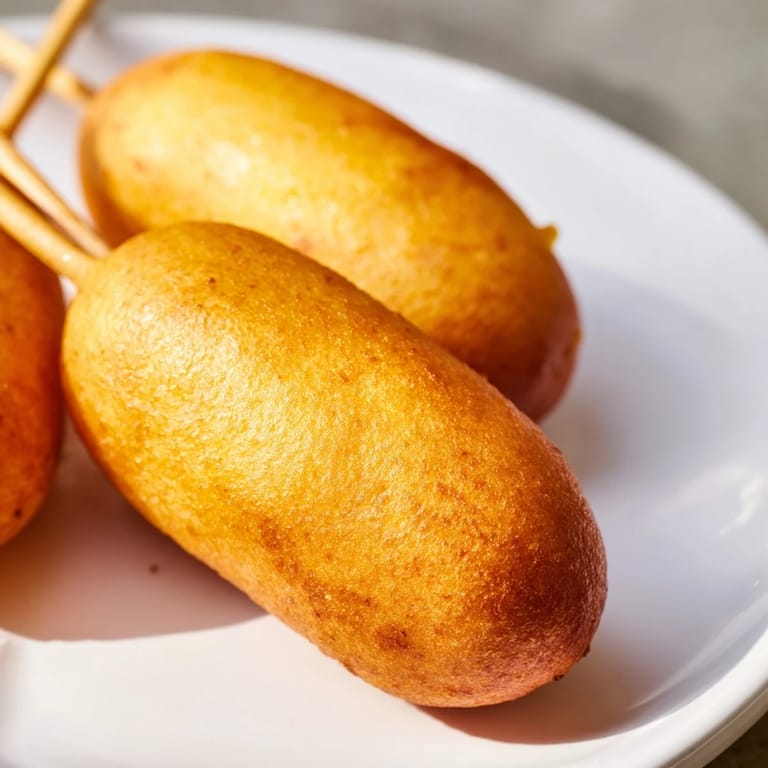
Save There's something about the smell of cornmeal hitting hot oil that instantly transports me back to county fairs and boardwalks—that moment when you spot the corn dog stand and suddenly nothing else matters. My first attempt at making them at home was pure chaos: I forgot to pat the hot dogs dry, watched them steam instead of fry, and ended up with a soggy mess. But that failure taught me everything I needed to know, and now these golden-fried beauties come out perfect every time, with that satisfying crunch and juicy center that makes them impossible to resist.
I made these for a backyard cookout last summer, and my neighbor literally asked if I'd bought them from somewhere—she couldn't believe they were homemade. That moment of pride, standing there with tongs in hand as everyone gathered around the plate, made me realize these weren't just snacks anymore; they'd become my thing.
Ingredients
- Hot dogs: The foundation of everything, and honestly, the quality matters here—good hot dogs make a real difference in the final bite.
- Wooden sticks: Soak them in water for 30 minutes beforehand so they don't char, and use sturdy ones that won't splinter.
- Yellow cornmeal: This is what gives corn dogs their signature sweetness and that satisfying crunch; don't skip it or substitute cornflour.
- All-purpose flour: Works with the cornmeal to create the perfect batter structure.
- Granulated sugar: A quarter cup might seem like a lot, but it's balanced by the savory elements and gives that caramel-like crust.
- Baking powder: Helps the batter puff up slightly and become extra-light.
- Salt: Just enough to enhance everything without overpowering.
- Whole milk and eggs: The wet ingredients that bind everything together into a smooth, coating consistency.
- Vegetable oil for frying: You need enough oil to fully submerge the corn dogs; a deep pot works in a pinch, but a deep fryer keeps the temperature steady.
Tired of Takeout? 🥡
Get 10 meals you can make faster than delivery arrives. Seriously.
One email. No spam. Unsubscribe anytime.
Instructions
- Prepare your hot dogs:
- Pat them completely dry with paper towels—this is non-negotiable—then carefully insert a stick lengthwise into the center of each one, leaving enough stick to grip comfortably.
- Heat your oil:
- Bring it to exactly 180°C (350°F) and let it stabilize for a few minutes; if it's not hot enough, the batter will absorb oil instead of frying, and if it's too hot, the outside will burn before the inside cooks.
- Make the dry mix:
- Whisk together cornmeal, flour, sugar, baking powder, and salt in a large bowl, breaking up any lumps with the back of your whisk.
- Create the batter:
- In another bowl, beat milk, eggs, and a tablespoon of oil until well combined, then pour it into the dry ingredients and whisk until you have a smooth, thick consistency that clings to the hot dog.
- Set up for dipping:
- Pour the batter into a tall glass—this makes the dipping motion so much easier and keeps the batter contained.
- Coat each one:
- Hold a hot dog by the stick and slowly rotate it in the batter until completely covered, letting excess drip off for just a second before moving to the oil.
- Fry with confidence:
- Carefully lower the coated hot dogs into the hot oil, frying only 2–3 at a time so you don't crowd the pan and drop the temperature, then turn them occasionally for 3–4 minutes until they're deep golden brown all over.
- Drain and rest:
- Remove them with tongs and place on a paper towel-lined plate to drain off excess oil while they're still hot.
 Save
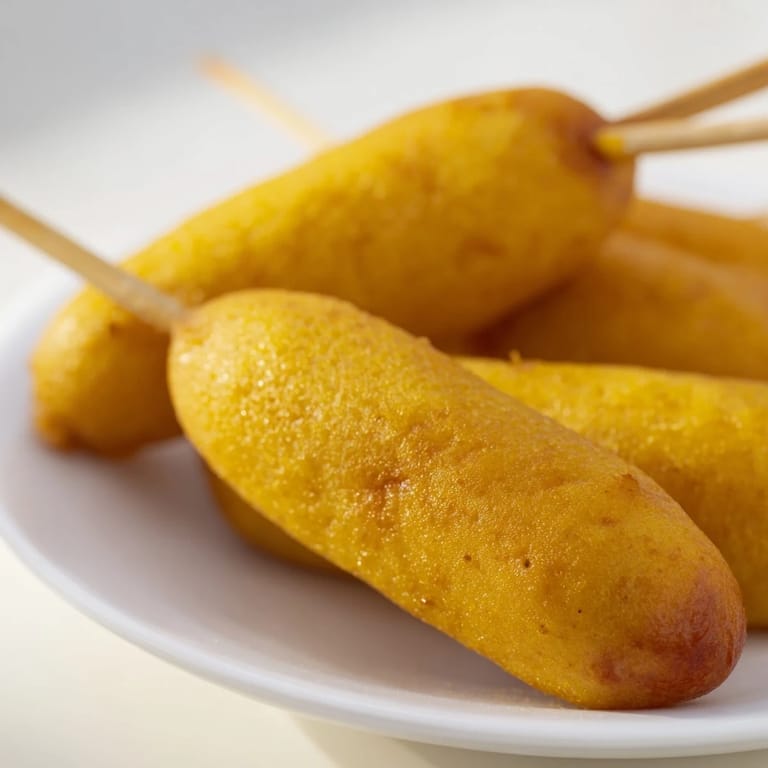
Save There was a moment during that summer cookout when my nephew, who's usually picky about everything, bit into one and just closed his eyes—like it was the best thing that had ever happened to him. That's when I understood why people have such vivid memories attached to food like this; it's not just about flavor, it's about that moment of pure, uncomplicated joy.
The Art of the Perfect Crunch
The golden exterior is all about timing and confidence—you want a deep, crispy shell that shatters between your teeth, but that only happens if you've kept your oil at the right temperature and paid attention during those final seconds of frying. I learned to listen for the sound change when a corn dog is done; the sizzle gets quieter and the bubbles slow down, which tells you the outside is set and the inside is heated through.
Making Them Ahead
You can actually prep the batter the morning of and keep it in the fridge, though it might thicken up a bit—just loosen it with another splash of milk when you're ready to fry. I've also frozen raw battered corn dogs on a tray and then fried them straight from the freezer, adding just a minute or two to the cooking time, which is a lifesaver for unexpected guests.
Elevating Your Serving Game
These are perfect on their own, but setting up a little condiment station makes it feel special—yellow mustard, ketchup, and relish are the classics, but I've gotten brave with sriracha mayo and even a tangy cheese sauce. The presentation matters too; serve them still warm on a paper-lined basket or platter, and they'll disappear faster than you can make them.
- Have all your toppings and sauces prepped and in small bowls before anyone starts eating.
- Keep finished corn dogs warm by loosely tenting them with foil while you fry the remaining batches.
- If you're feeding a crowd, fry them in waves and serve the hot ones immediately rather than trying to do everything at once.
 Save
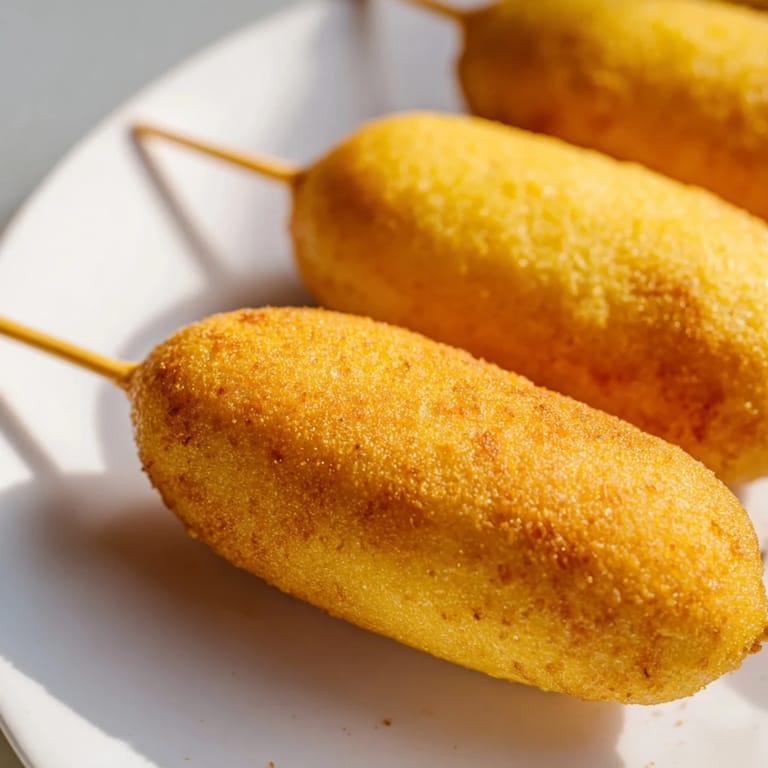
Save Making corn dogs at home is one of those small victories that feels disproportionately satisfying, and once you nail it, you'll never be intimidated by deep frying again. Serve them warm, watch people's faces light up, and enjoy knowing you've just made something that tastes like a memory.
Recipe FAQ
- → What is the best oil for frying corn dogs?
Vegetable oil with a high smoke point, such as canola or peanut oil, works best to achieve a golden, crispy batter without burning.
- → How can I tell when the corn dogs are cooked?
Fry until the batter turns a consistent golden brown and the hot dogs inside are heated through, usually 3 to 4 minutes.
- → Can I make the batter ahead of time?
It's best to dip the hot dogs immediately after mixing the batter to maintain its thickness and ensure proper coating.
- → What can I use instead of wooden sticks?
Popsicle sticks or bamboo skewers work well as handles for dipping and frying.
- → How do I keep the batter from being too thick or thin?
If the batter is too thick, gradually add milk until smooth; if too thin, add a little more cornmeal for thicker consistency.
- → Are there alternative sausages to use?
Turkey or veggie sausages can be substituted to suit dietary preferences without altering the cooking method.