 Save
Save The first time I actually understood what made Hummingbird Cake special wasn't from reading a recipe—it was watching my grandmother sneak a second slice while pretending to clean up after Sunday dinner, the way the frosting stuck to her fork with this satisfied little smile. She'd been making it for decades, but there was something about how she described those layers of fruit and nuts that made it sound like she was sharing a secret, not just listing ingredients. Years later, I realized she wasn't keeping the cake special through technique—she was keeping it alive through the stories attached to it, the way it showed up at celebrations and quiet afternoons alike.
I made this for my neighbor's book club gathering last spring, and what stuck with me wasn't the compliments about the frosting—though there were plenty—but the sound of forks clinking against plates in that comfortable, quiet way that means people are genuinely enjoying something. Someone asked for the recipe before dessert was even finished, and I found myself describing the smell of toasted pecans filling the kitchen while the layers baked, how you can tell the cakes are done by the way they spring back under your finger. It became less about giving someone instructions and more about inviting them into that moment.
Ingredients
- All-purpose flour: Three cups creates the structure—enough body to support the wet fruits without becoming dense.
- Granulated sugar: Two cups sweetens the cake layers themselves, so the frosting doesn't have to do all the work.
- Baking soda: Just one teaspoon activates when it meets the acidic pineapple juice, giving you that tender crumb.
- Ground cinnamon: This single teaspoon quietly ties everything together, warming the fruit flavors without announcing itself.
- Salt: Half a teaspoon balances the sweetness and makes the vanilla taste more like vanilla.
- Room temperature eggs: Three of them emulsify with the oil to create moisture that lasts, not eggs you can taste individually.
- Vegetable oil: One cup instead of butter means the cake stays tender even after a day or two sitting on the counter.
- Pure vanilla extract: Two teaspoons for the cake, one more for the frosting—real vanilla matters here because you're not competing with chocolate.
- Toasted pecans: One cup chopped, plus extra for the top—toasting them first brings out an almost buttery depth that raw nuts can't match.
- Ripe bananas: About three mashed into roughly two cups, as ripe as they can be without being brown, sweet and fragrant.
- Crushed pineapple with juice: One can undrained—that juice is doing the baking soda work, don't pour it off.
- Cream cheese: Eight ounces softened, the backbone of a frosting that's tangy enough to feel grown-up.
- Unsalted butter: Half a cup softened and beaten with the cream cheese for stability and richness.
- Powdered sugar: Four cups sifted so you don't end up with little lumps of sweetness hiding in your frosting.
Tired of Takeout? 🥡
Get 10 meals you can make faster than delivery arrives. Seriously.
One email. No spam. Unsubscribe anytime.
Instructions
- Set the stage:
- Preheat your oven to 350°F and prepare three 8-inch round pans with either a light greasing and flour or parchment paper rounds. The parchment works better if you've had cakes stick before, and there's no shame in that.
- Build the dry foundation:
- In a large bowl, whisk together flour, sugar, baking soda, cinnamon, and salt. This isn't just mixing—you're aerating the flour and distributing the leavening evenly.
- Combine the wet elements:
- Beat eggs, oil, and vanilla in another bowl until the mixture looks pale and slightly thickened. Then stir in the mashed bananas, crushed pineapple with all its juice, and those toasted pecans.
- Bring it together gently:
- Pour the wet into the dry and fold until just combined—when you see no more streaks of flour, stop. Overmixing develops gluten that makes cake tough, and tough cake is not the point here.
- Fill and bake:
- Divide the batter evenly among your three pans and slide them into the oven for 25 to 30 minutes. You'll know they're done when a toothpick inserted near the center comes out clean or with just a few moist crumbs clinging to it.
- Cool with patience:
- Let the layers sit in their pans for 10 minutes—this lets them set enough to turn out cleanly—then turn them out onto wire racks to cool completely. Trying to frost warm cake is a recipe for frosting melting into the crumb.
- Make the frosting magic:
- Beat softened cream cheese and butter together until smooth and creamy, then gradually add the sifted powdered sugar, vanilla, and salt. Beat until fluffy—this takes longer than you think and is absolutely worth it.
- Assemble with confidence:
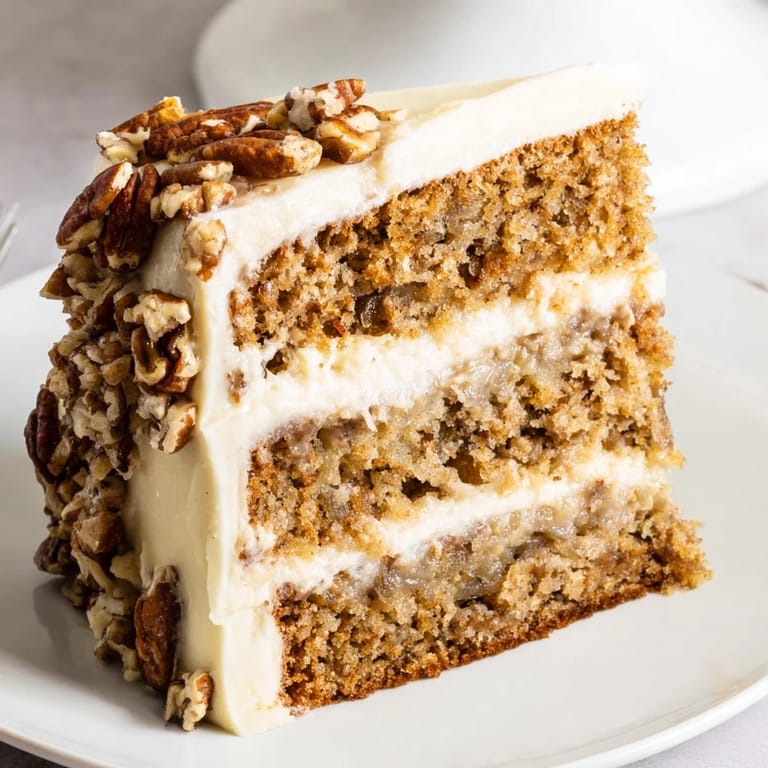
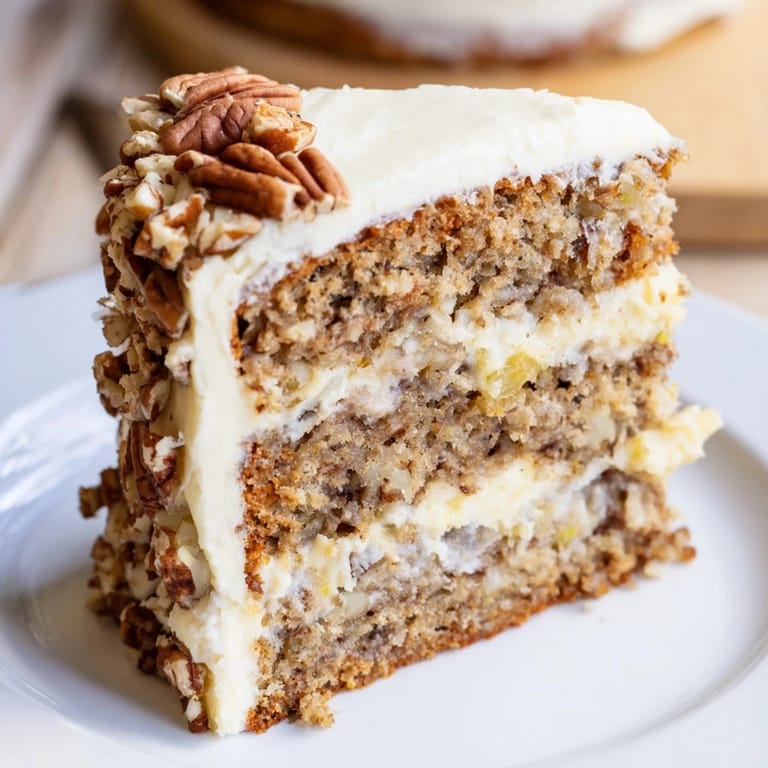
- Place the first layer on your cake stand or plate, spread frosting over the top, then repeat with the second layer. Crown it all with the third layer and frost the top and sides, then press toasted pecans into the frosting while it's still soft enough to hold them.
 Save
Save There's a particular kind of joy that comes from watching someone bite into a slice and close their eyes for a second, like they're transported somewhere. That's what this cake does—it reaches back into memory and forward into the moment all at once, something warm and familiar but still surprising.
Why This Cake Endures
Hummingbird Cake belongs to a specific moment in American food culture, that bridge between simple church potluck desserts and the more refined cakes you see in bakeries now. What makes it work is that it doesn't apologize for either side—it's humble and indulgent at the same time. The fruit keeps it from feeling heavy despite all that frosting, and the pecans give it a sophistication that plain layer cakes don't have, but it's still approachable enough that anyone would feel confident making it.
Storage and Make-Ahead Magic
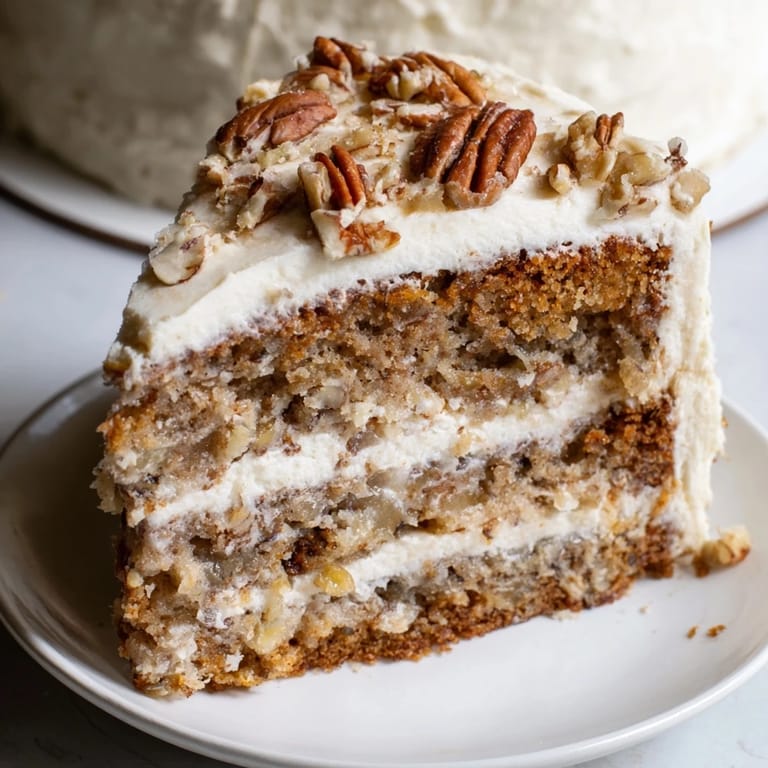
This cake actually improves after a day—the flavors settle and deepen, and the layers fuse together in this gentle way that makes slicing cleaner. You can bake the layers a full day ahead, wrap them tightly in plastic wrap, and frost the next day without any loss of quality. Once frosted, it keeps beautifully covered at room temperature for a couple of days or in the refrigerator for up to five, though I've never had it last that long.
The Small Decisions That Matter
Details shift this cake from good to memorable: using pure vanilla instead of imitation, toasting the nuts yourself rather than buying them pre-toasted, sifting the powdered sugar so you don't bite into sweetness crystals. These aren't complicated changes, but they're the difference between a cake that tastes like a recipe and one that tastes like someone cared. Think of them as the kitchen equivalent of writing in pen instead of pencil—they show intention.
- Room temperature ingredients beat every time because they incorporate more smoothly and create a better texture than cold ones fighting their way into the batter.
- If you're nervous about the frosting, make it an hour ahead and let it sit—this actually helps it firm up to the right consistency for spreading.
- Keep toasted pecans on hand during the final frosting step because you'll want to press them in while the frosting is still soft enough to hold them.
 Save
Save This cake has a way of becoming part of someone's story, the way food does when it's made with attention and offered with generosity. Make it for the people you want to linger a little longer at the table.
Recipe FAQ
- → What makes this cake moist?
The combination of ripe bananas, crushed pineapple with juice, and vegetable oil contributes to its moist texture.
- → Can I omit pecans if allergic?
Yes, pecans can be omitted for a nut-free variation without affecting the overall moistness.
- → How is the cream cheese frosting made smooth?
Beating softened cream cheese and butter together until creamy, then gradually adding sifted powdered sugar and vanilla ensures a smooth frosting.
- → What spices are used in the cake batter?
Ground cinnamon and a pinch of salt enhance the flavor profile of the batter.
- → How should the cake layers be prepared before frosting?
After baking, cool the layers completely on wire racks; you may also bake a day ahead and wrap tightly before frosting.