 Save
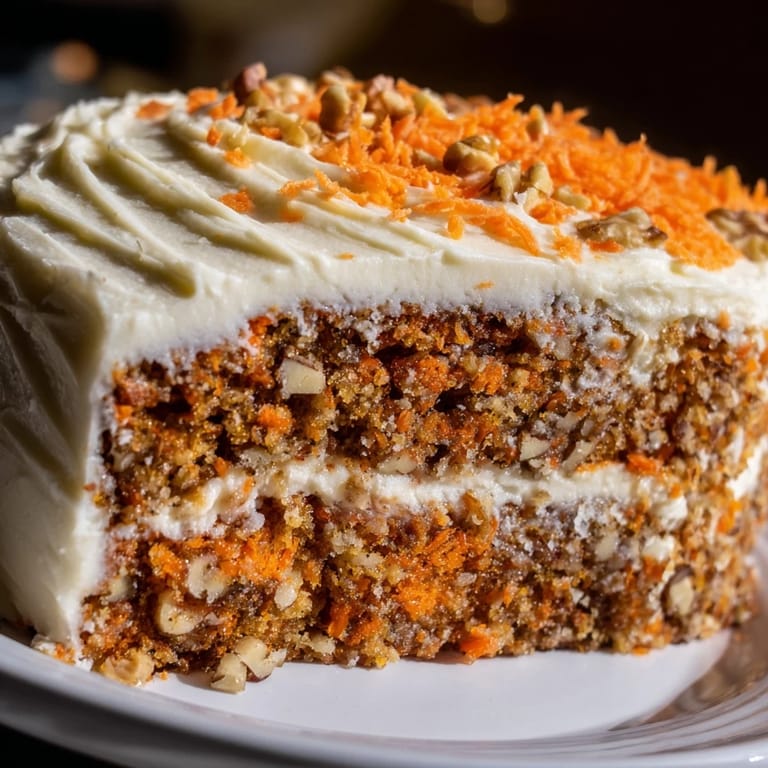
Save My grandmother kept a worn recipe card for carrot cake tucked behind her flour canister, splattered with oil stains and coffee rings from decades of use. The first time I made it, I couldn't quite figure out why my version felt dry until she reminded me that the pineapple wasn't just an ingredient—it was the secret keeper of moisture. Now when I bake this cake, I'm transported to her kitchen, where the smell of cinnamon and nutmeg meant something special was happening, and I understood that some recipes carry more than flavors; they carry stories.
I made this cake for a potluck on a rainy Saturday, unsure if anyone would even try it, and watched a coworker take three bites before asking for the recipe. She said it tasted like someone actually cared about making it, which I think is the highest compliment a dessert can receive.
Ingredients
- All-purpose flour (2 cups): The foundation that holds everything together; make sure to measure by spooning and leveling, not scooping directly from the bag.
- Ground cinnamon, nutmeg, and ginger (2 tsp, 1/2 tsp, and 1/2 tsp): These three create the warm, complex backbone of the cake; toasting them gently in a dry pan for 30 seconds before adding to the dry mixture intensifies their flavor.
- Baking powder and baking soda (1 1/2 tsp and 1 tsp): Work together to lift the batter; make sure they're fresh or the cake won't rise properly.
- Granulated and brown sugar (1 cup and 1/2 cup): The combination gives the cake both sweetness and a subtle molasses depth.
- Vegetable oil (1 cup): Keeps the cake tender and moist better than butter alone would.
- Eggs (4 large): Bring them to room temperature so they incorporate smoothly and create a better crumb structure.
- Vanilla extract (2 tsp): Use real vanilla if you can; it makes a noticeable difference in the final taste.
- Grated carrots (2 cups): Grate them just before using so they don't dry out; medium-sized carrots work best.
- Chopped walnuts or pecans (1 cup): Toast them first if you want deeper, nuttier flavor that won't fade into the background.
- Crushed pineapple, well-drained (1 cup): This is the moisture keeper; drain it thoroughly or your cake risks being soggy.
- Cream cheese (8 oz) and unsalted butter (1/2 cup): Both must be softened to room temperature for frosting that's silky, not grainy.
- Powdered sugar (2 1/2 cups): Sift it first to break up any lumps that could create a gritty frosting.
Tired of Takeout? 🥡
Get 10 meals you can make faster than delivery arrives. Seriously.
One email. No spam. Unsubscribe anytime.
Instructions
- Set the stage:
- Preheat your oven to 350°F and prepare two 9-inch round pans with either butter and flour or parchment paper. This step ensures your cake releases easily and bakes evenly.
- Build the dry blend:
- Whisk together flour, cinnamon, nutmeg, ginger, baking powder, baking soda, and salt in a large bowl until the spices are evenly distributed. You'll see tiny flecks of cinnamon throughout—that's what you want.
- Cream the sugars and oil:
- In another bowl, beat granulated sugar, brown sugar, and oil until they look like wet sand. This creates the base that will keep your cake tender.
- Add the eggs one by one:
- Beat in each egg fully before adding the next so the mixture stays emulsified and creamy. Stir in vanilla extract last.
- Marry the wet and dry:
- Gradually add the dry mixture to the wet ingredients, stirring gently until just combined. Don't overmix or you'll toughen the crumb.
- Fold in the goodness:
- Gently fold in grated carrots, nuts, well-drained pineapple, and raisins if using. The batter should feel studded with texture without being clumpy.
- Divide and bake:
- Pour batter evenly between the two prepared pans, smooth the tops, and bake for 35 to 40 minutes until a toothpick inserted in the center comes out clean. The kitchen will smell unbelievable.
- Cool with patience:
- Let the cakes sit in their pans for 10 minutes so they set slightly, then turn them out onto a cooling rack. This resting time prevents them from breaking apart.
- Make the frosting:
- Beat softened cream cheese and butter until smooth and pale, then gradually add sifted powdered sugar, vanilla, and salt. Beat until light and fluffy—this takes a minute or two longer than you'd think.
- Assemble with care:
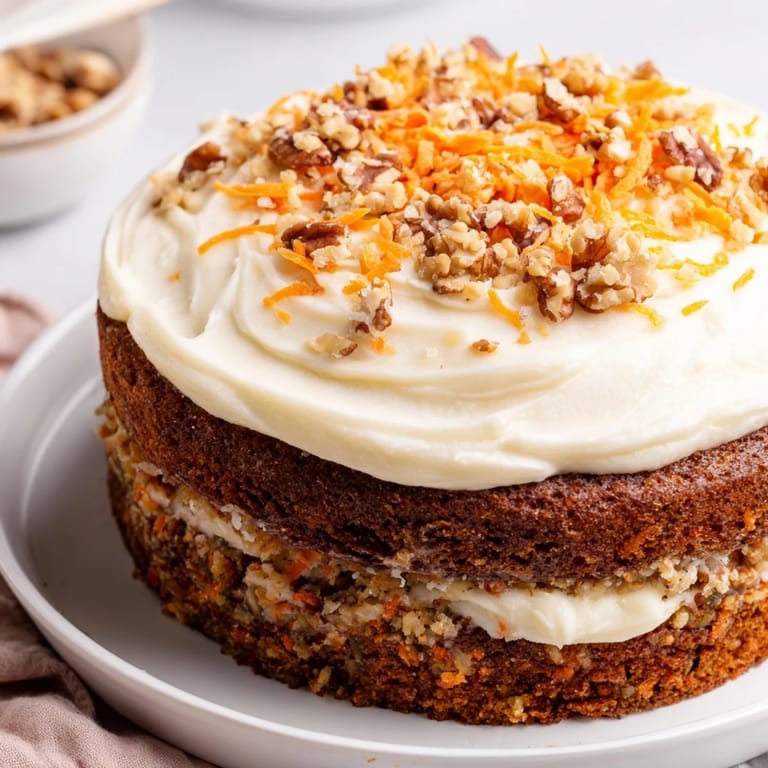
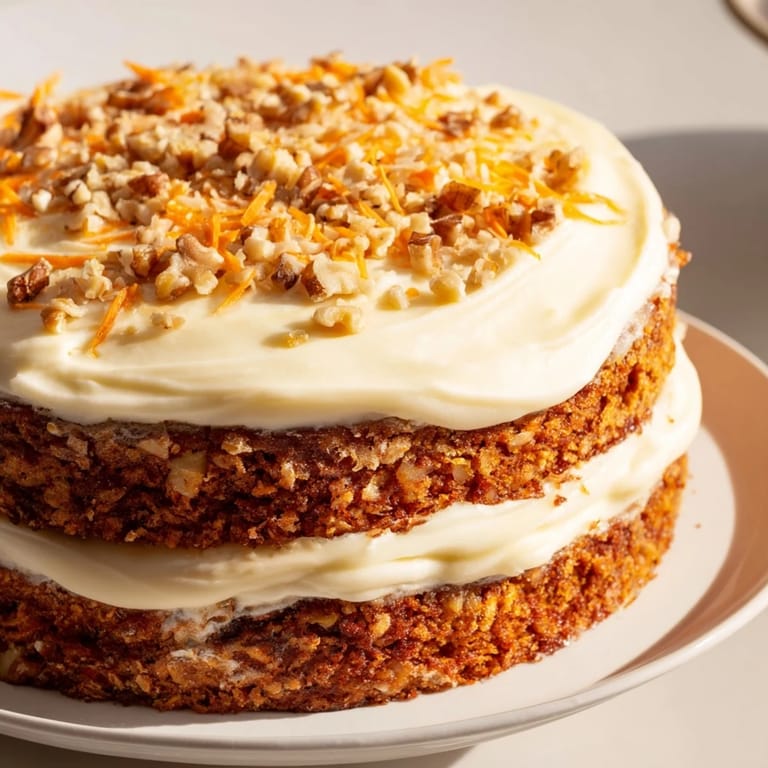
- Once cakes are completely cool, place one layer on your serving plate, spread frosting between layers, then frost the top and sides. If you want it to look impressive, chill the frosted cake for 30 minutes before decorating.
 Save
Save There's a moment, right when you pull the cake from the oven and the whole kitchen fills with that cinnamon-nutmeg cloud of steam, where you realize you've made something that people will want to be around. That moment makes all the measuring and mixing worth it.
The Secret of Spiced Cakes
Spiced cakes live in this interesting zone where too much spice becomes medicinal and too little feels flat. The trick is not to think of cinnamon, nutmeg, and ginger as individual flavors competing for attention, but as a chorus singing together. I learned this after making a batch where I doubled the cinnamon and everyone asked if I was trying to make a candle. Now I trust the ratios and respect the balance.
About Frosting and Stability
Cream cheese frosting is forgiving but particular. If your kitchen is warm, the frosting might soften faster than you'd like, which is why some bakers chill the frosted cake before serving. I've also learned that cream cheese frosting actually tastes better the next day—the flavors settle and deepen, so if you're not eating the cake the same day you make it, that's actually a feature, not a bug.
Variations and Moments
This cake has been my vehicle for experimentation over the years. I've added shredded coconut, swapped half the oil for applesauce to lighten it, and even made a version with cardamom instead of ginger that my mother still asks me to make for her birthday. The bones of the recipe stay solid no matter what you adjust, which is why it's lasted through generations of my family's kitchens.
- Toast your nuts before adding them to unlock deeper, richer flavor that stands up to the spices.
- For a tangier frosting, use full-fat Greek yogurt mixed with some of the cream cheese.
- Store leftovers covered in the refrigerator and they'll stay moist for up to five days.
 Save
Save Carrot cake is one of those recipes that reminds you why people gather around tables to eat. Make it, slice it, watch someone's face when they taste it, and you'll understand why this cake has earned its place in kitchens for more than a hundred years.
Recipe FAQ
- → What spices are used in this cake?
Ground cinnamon, nutmeg, and ginger are combined to create a warm, aromatic flavor profile.
- → Can walnuts be substituted?
Yes, you can swap walnuts with pecans according to your preference for a slightly different texture and taste.
- → How long should the cake be baked?
Bake for 35 to 40 minutes at 350°F (175°C) until a toothpick inserted in the center comes out clean.
- → Is it necessary to cool the cake before frosting?
Allowing the cake to cool completely prevents the frosting from melting and ensures a smooth, stable finish.
- → Are there any storage tips to keep the cake fresh?
Store the finished cake covered in the refrigerator for up to five days to maintain freshness and flavor.